
This article was published in Scientific American’s former blog network and reflects the views of the author, not necessarily those of Scientific American
Last weekend, a severe winter storm struck the eastern United States and left one million Americans without power. The blackouts spanned from Arkansas to Massachusetts. But, any fears of Sandy-level outages were not realised.

U.S. Energy Information Administration, based on U.S. Department of Energy, Energy Assurance Daily
All told, the blizzard brought more than a foot of snow to at least 14 states, with several places recording record snowfall levels. But, because of advanced warning, utilities were able to prepare for potential power outages. In the end, the number of people impacted was less than one-eighth (11.7%) of those impacted during Hurricane Sandy in 2012.
On supporting science journalism
If you're enjoying this article, consider supporting our award-winning journalism by subscribing. By purchasing a subscription you are helping to ensure the future of impactful stories about the discoveries and ideas shaping our world today.

U.S. Department of Energy; Jen Christiansen, Scientific American
According to the U.S. DOE, Duke Energy had the most outages of any utility in the area, with nearly 500,000 customers in the Carolinas losing power. According to the DOE’s Energy Assurance Daily, the power was back online for almost everyone affected by the storm by Wednesday afternoon. Conversely, many of those impacted by Sandy were without power for over a week.
The blizzard took out power to PBF Energy’s Delaware City refinery, which accounts for 15% of East Coast's total operable refining capacity. But, this was the only refinery that reported storm-related problems over the weekend. While natural gas demand rose slightly, both prices and supply remained stable.

Matt Popovich (CC0.0)

Matt Popovich (CC0.0)

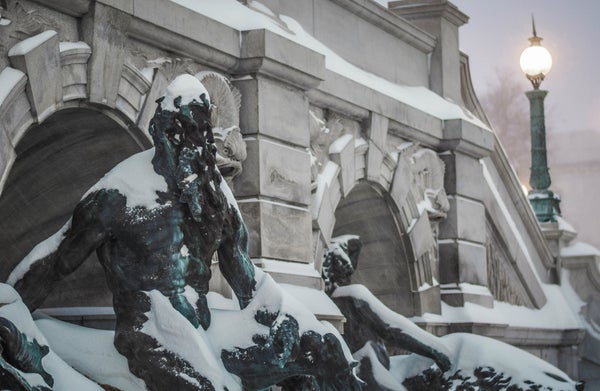
Photo of Chinatown in DC "Snowzilla 2016" by Matt Popovich (CC0.0)