
This article was published in Scientific American’s former blog network and reflects the views of the author, not necessarily those of Scientific American
In their new report, “Energy and Air Pollution” the International Energy Agency says that “air pollution is an energy problem” as discusses the role that the energy sector can play in reducing air pollution around the globe.
One of the key air pollutants produced by the energy sector is nitrogen dioxide. This gas is emitted during the combustion of fossil fuels (for example, in cars or in power plants) and contributes to the formation of ground-level ozone and fine particulate matter air pollution. In turn, scientific studies have linked NO2 emissions with a number of negative health impacts including asthma and other respiratory illness.
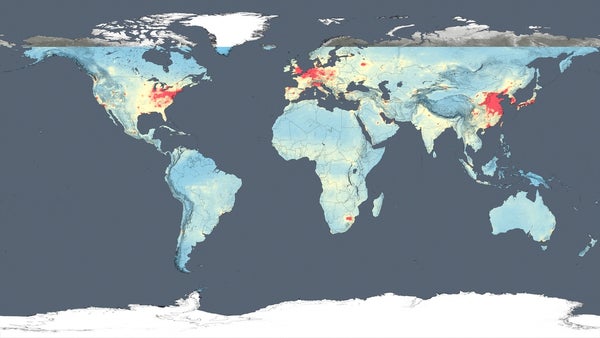
In 2015, NASA Goddard released a series of high-resolution global satellite maps of NO2 concentrations around the globe with a particular focus on 195 cities. In their video titled “Human Fingerprint on Global Air Quality”, NASA discusses changes in air pollution over the past decade and the factors that contributed to these shifts.
On supporting science journalism
If you're enjoying this article, consider supporting our award-winning journalism by subscribing. By purchasing a subscription you are helping to ensure the future of impactful stories about the discoveries and ideas shaping our world today.
According to NASA scientist, Bryan Duncan and his team:
“The United States, Europe and Japan have improved air quality [over the past decade] thanks to emission control regulations, while China, India and the Middle East, with their fast-growing economies and expanding industry, have seen more air pollution.”
However, it should be noted that - while China saw increases in air pollution concentrations due to rising coal use in power plants - the city of Beijing saw a net decrease in NO2 pollution between 2005 and 2014. According to Duncan, this decrease was due to a growing middle class that “is now demanding cleaner air”.
Conversely - in the middle east - air pollution decreased in Syria due to the country’s civil war and the resulting displacement of people from Syria to its neighboring countries.
To see more detail on air pollution concentrations in cities around the world, one can view NASA Goddard’s video, which exists in the public domain.
Note: When viewing the images in this video, the red/orange areas represent those that experienced a net increase in air pollution levels between 2005 to 2014. The blue areas indicate a net decrease over the same period.