
This article was published in Scientific American’s former blog network and reflects the views of the author, not necessarily those of Scientific American
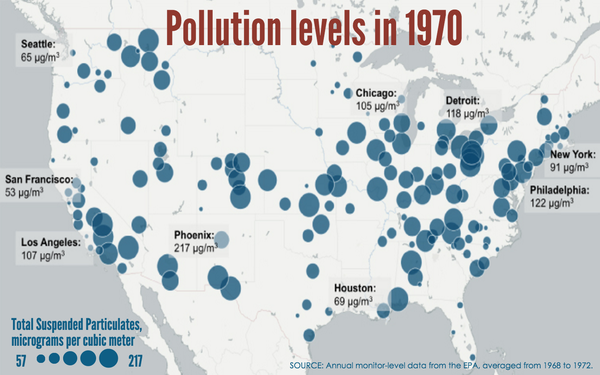
When the Clean Air Act was passed in 1970, Los Angeles was known as the “smog capital of the world” and Steubenville, Ohio was about as polluted as Beijing, according to University of Chicago’s Michael Greenstone. But, Greenstone says, the air is a lot cleaner today. In turn, increases to life expectancies have been realised across the nation.
This is not to say that the Clean Air Act’s work is done. In truth, air pollution is still a significant challenge in the United States. For example, air pollution from combustion processes – primarily from transportation and power generation – results in an estimated 200,000 early deaths across the country each year. But, the nation's air is certainly getting cleaner.
This trend can be seen by looking at particulate matter concentration data from 1970 to 2012 from the U.S. Environmental Protection Agency (EPA), Greenstone's team was able to calculate changes in life expectancy for metropolitan areas across the nation. For example, according to their results, the following life expectancy increases were seen in these metro areas:
On supporting science journalism
If you're enjoying this article, consider supporting our award-winning journalism by subscribing. By purchasing a subscription you are helping to ensure the future of impactful stories about the discoveries and ideas shaping our world today.
Weirton, West Virginia (+5.2 years)
Wichita, Kansas (+4.3 years)
Phoenix, Arizona (+3.9 years)
New Castle, Pennsylvania (+3.9 years)
Mobile, Alabama (+3.9 years)
Youngstown, Ohio (+3.4 years)
Chattanooga, Tennessee (+3.0 years)
Pueblo, Colorado (+2.9 years)
Kingsport, Tennessee (+2.9 years)
Birmingham, Alabama (+2.8 years)
Los Angeles, California (+1.7 years)
Houston, Texas (+0.9 years)
