
This article was published in Scientific American’s former blog network and reflects the views of the author, not necessarily those of Scientific American
Rules that regulate air pollution in California have led to a dramatic drop in cancer risks since 1990.
According to a new study published in the journal “Environmental Science and Technology,” California saw a significant drop in seven major toxic air pollutants between 1990 and 2012. All told, this cleaner air has led to a 76% decrease in Californian’s associated risk of developing cancer due to exposure to seven major air pollutants.
According to the study's authors, the most important improvements in Californian's cancer risk came from decreasing pollution from diesel vehicles. From 1990 to 2012, concentrations of diesel soot (also called “diesel particulate matter” or DPM) declined by 68%. These reductions occurred in spite of the fact that total vehicle miles travelled by diesel vehicles in California increase by more than 30% over this period. Furthermore, between 1990 and 2012 the state’s population grew by 31% and the gross state product grew increased 74%.
On supporting science journalism
If you're enjoying this article, consider supporting our award-winning journalism by subscribing. By purchasing a subscription you are helping to ensure the future of impactful stories about the discoveries and ideas shaping our world today.
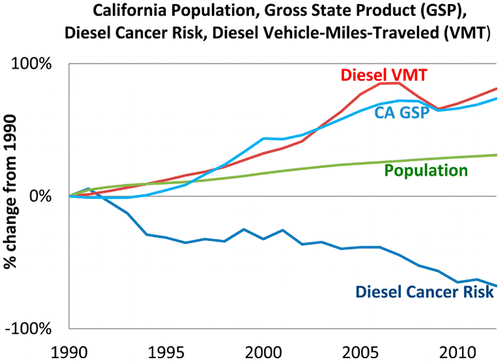
Reference: Popper, et. al. “Ambient and Emission Trends of Toxic Air Contaminants in California” Environ. Sci. Technol. DOI: 10.1021/acs.est.5b02766. Publication Date (Web): September 4, 2015
These reductions have been credited to statewide air pollution rules that were established in the 1980s and have subsequently led to reductions in the amount of diesel soot, benzene, and other cancer-causing air pollutants emitted in the state.