
This article was published in Scientific American’s former blog network and reflects the views of the author, not necessarily those of Scientific American
There are more than 2 million electric vehicles* on the road today. But, these vehicles only represent 1% of the vehicles currently on the road. At the same time, the number of people with access to electricity has never been higher.
But does this mean that all of the world’s cars could someday be electric?
This is the question explored in a recent episode of the BBC’s CrowdScience. In this episode, presenter Marnie Chesterton heads to Los Angeles to visit the Southern California headquarters of the electric vehicle and mobility company, Faraday Future. She then discusses the practicalities of recent country pledges - including from India, the United Kingdom, France, Norway and even China – to move away from diesel and gasoline powered vehicles.
On supporting science journalism
If you're enjoying this article, consider supporting our award-winning journalism by subscribing. By purchasing a subscription you are helping to ensure the future of impactful stories about the discoveries and ideas shaping our world today.
Chesterton talks to experts in the United States and Europe about the impacts of EVs on the electricity system and the ins-and-outs of charging EV batteries. Chesterton even checks out one of today’s EV prototypes, the FF91 by Faraday Future.
One can listen to this episode for free here.
.jpg?w=2000)
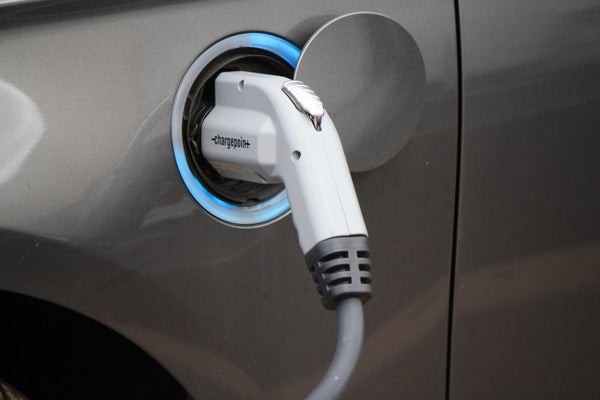
Credit: Mauricio Pesce Flickr (CC BY 2.0)
*electric vehicles refer to both battery electric (all-electric) vehicles and hybrid electric vehicles (i.e. those vehicles with both an electric motor and an engine that runs off of gasoline or diesel)