
This article was published in Scientific American’s former blog network and reflects the views of the author, not necessarily those of Scientific American
How can you build schools in rural Kenya, where grid-connected electricity is in short supply?
One option is to think a bit like IKEA.
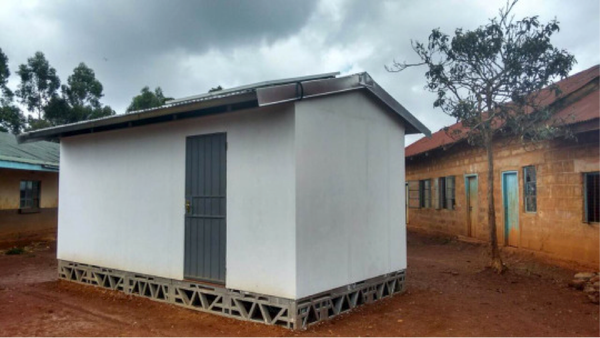
In their “Solar Classroom in a Box” pilot project, UK-based Aleutia takes prefabricated and tech-enabled school buildings that are “flat-packed like an IKEA dresser” and ships them to the areas where they are most needed. Each pack “can be transported in a pickup or cattle truck” and then assembled on-site over two days using nothing but a screwdriver. According to Aleutia:
On supporting science journalism
If you're enjoying this article, consider supporting our award-winning journalism by subscribing. By purchasing a subscription you are helping to ensure the future of impactful stories about the discoveries and ideas shaping our world today.

Photo of men unloading school pieces from flatbed truck courtesy of Stonehouse Kenya via Aleutia
“They can then be assembled together using standard screw drivers (again IKEA) onsite so there’s no need to hire an expensive crane to lift the structure and lower it down and we don’t have worry about the computers shaking around as they are unpacked and cabled on site - a 48 hour process.“
The end result is a 200 square foot classroom complete with solar panels to provide electricity. Some of this solar power is for the 11 computers that also come in the kit, preloaded with information from Wikipedia and Khan Academy. All for a cost of less than $20,000 per school.

Photo of interior of off-grid school house with its computers courtesy of Stonehouse Kenya via Aleutia
Aleutia has previously considered using shipping containers to transport the prefabricated pieces. However, according to Aleutia's Director Mike Rosenberg, transport costs for a flatbed truck to were high plus they needed a crane to move the shipping container from the truck to the school building's foundation. In turn, they moved to the flat-pack concept.
According to current statistics from UNESCO and the World Bank, three-quarters of Kenyans live in rural areas and more than 1 million children don’t have access to education. In its pilot project, Aleutia is planning to deliver schools to 47 locations across rural Kenya. Its first school was completed in July in Kiambu County, north of Nairobi.