
This article was published in Scientific American’s former blog network and reflects the views of the author, not necessarily those of Scientific American
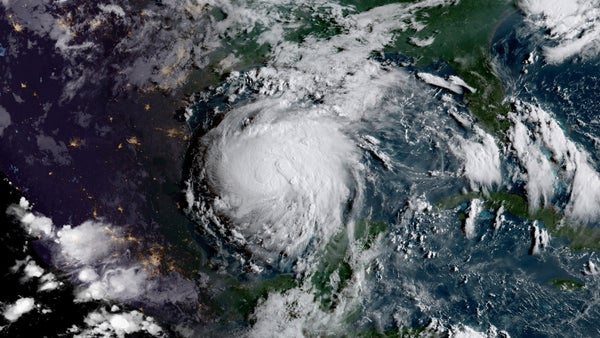
The widespread flooding and high winds that blew in with Hurricane Harvey took hundreds of electricity lines and more than 10,000 Megawatts (MW) of electricity generating capacity offline according to new information from the U.S. Energy Information Administration (EIA). But, to cooler-than-normal weather in the area helped to reduce the impacts of these outages.
According to the EIA, six 345 kilovolt (kV) and more than two hundred 69-138 kV transmission lines were taken offline in Texas as Hurricane Harvey made its way in from the Gulf of Mexico. Some of these lines were in the Houston area, where more than 4 feet of rain caused extensive flooding, destroyed thousands of homes, and resulted in several deaths.
However, most of these lines ran along the Texas Gulf Coast where sustained wind speeds reached 130 miles per hour (mph).
On supporting science journalism
If you're enjoying this article, consider supporting our award-winning journalism by subscribing. By purchasing a subscription you are helping to ensure the future of impactful stories about the discoveries and ideas shaping our world today.
These high winds also brought down the amount of power generated by wind in Texas as operators worked to protect the wind turbines from damage. These turbines are generally shut-down when wind speeds exceed 55 mph. With this August storm, this safety limit meant that the amount electricity produced by wind power grew significantly in the days before and after the peak of the hurricane. But, wind power dropped at the height of the storm.

Credit: U.S. EIA 2017
However, the Texas grid operator (ERCOT) was able to meet customer electricity demand in those areas not impacted by inoperable power lines, in part because of cooler temperatures in the area.
On a typical August day in Texas, one would expect temperatures to peak in the high 90s or even above 100 degrees Fahrenheit. But, during Hurricane Harvey, local temperatures dropped to the 70s and 80s, bringing demand for air conditioning down with it. This meant less demand for air conditioning, a major driver of summer electricity demand.

Credit: U.S. EIA 2017