
This article was published in Scientific American’s former blog network and reflects the views of the author, not necessarily those of Scientific American
Yesterday, Hyliion took home the grand prize at the Department of Energy’s National Clean Energy Business Plan Competition in Washington, DC.
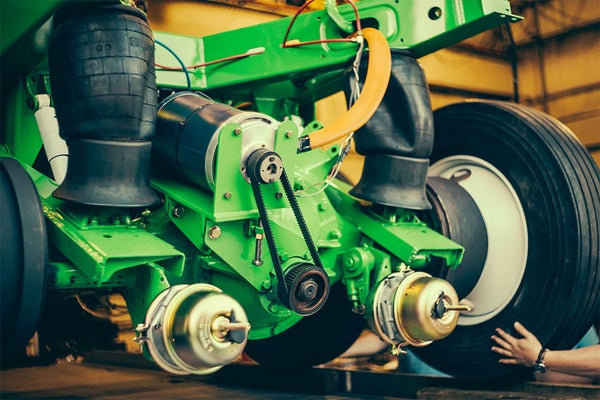
This student start-up from Carnegie Mellon University took home the $50,000 prize for its SMART Suspension System. This slide-in suspension system for tractor-trailers that could reduce fuel use in these trucks by 31% by acting as an add-on hybrid module. The system is designed to recover energy through regenerative braking, store that energy in a pack of lithium-ion batteries, and then use it later to assist with acceleration and braking, as well as maintaining comfort in the truck’s cab while the vehicle is idle. The system is installed on the rear axel of the trailer and also includes a drag reduction plate.

Hyliion in Washington, DC yesterday after winning the competition
Photo Credit: Matt Dozier, U.S. Department of Energy
On supporting science journalism
If you're enjoying this article, consider supporting our award-winning journalism by subscribing. By purchasing a subscription you are helping to ensure the future of impactful stories about the discoveries and ideas shaping our world today.
This was the final year for the NCEBP Competition, which has worked to connect promising student start-ups with a broad support network of technology and business experts as well as the clean energy tech investor community. Next year, evolve into the new Cleantech University Prize. According to Jennifer Garson, Tech to Market Analyst at the US Department of Energy and coordinator of the National Clean Energy Business Plan Competition:
“Spark Clean Energy, a national nonprofit focused on engaging students in clean energy, has been selected to run the Cleantech UP Hub and will be responsible for creating a national prize, training student entrepreneurs and serving as a coordinating body for energy entrepreneurship training. The hosts of the Cleantech UP Collegiate Competitions will provide cash prizes for eight individual university-focused competitions that will equip students with business skills to move clean energy technologies from the discovery phase to the marketplace.”
To read more about Hyliion's technology – see this article (link), which was published on Plugged In in April after the Rice Business Plan Competition.