
This article was published in Scientific American’s former blog network and reflects the views of the author, not necessarily those of Scientific American
I suspect that many readers visiting our blog are interested in energy - and there's a brand new educational app available to get you up to speed covering a myriad of interesting energy topics.
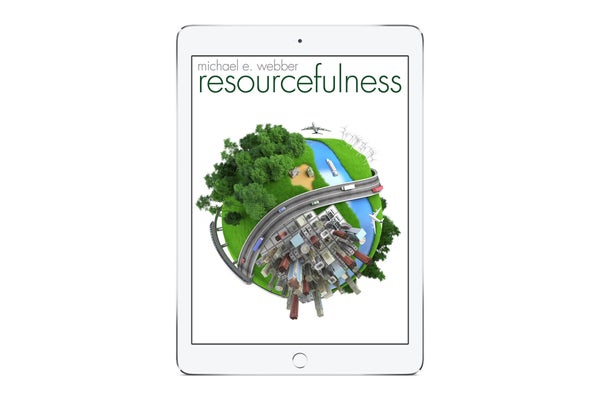
Resourcefulness: An Introduction to the Energy-Water Nexus was developed by my brilliant colleague and friend, UT professor Michael E. Webber along with DISCO Learning Media and Itron. This educational app will be made available to students globally with the goal of improving water and energy literacy, encouraging conservation and resourcefulness, and inspiring the next generation of innovators. The material can be integrated into existing classes through project-based learning and case studies, or educators can build new courses using prepared standards guides provided.
I'm not just a fan of this innovative and necessary app, I'm actively promoting it because energy is so poorly understood broadly, yet so fundamental to finding solutions to our greatest challenges. In fact, I contributed a forward for the app. Here's a snippet:
On supporting science journalism
If you're enjoying this article, consider supporting our award-winning journalism by subscribing. By purchasing a subscription you are helping to ensure the future of impactful stories about the discoveries and ideas shaping our world today.
The energy-water nexus is not only complex but also multidisciplinary. Developing a comprehensive understanding involves delving into engineering, policy, biotechnology, geoscience, and more.
The digital interactive curriculum of Resourcefulness does just that in an easy to digest manner that’s comfortable, relatable, interesting, and fun. This first-of-its kind educational app will help students understand and articulate not just the science and business
of energy and water, but the political, technical, and social issues involved in finding critical solutions to our most pressing energy needs.
Resourcefulness acts as a hub for tackling practical energy and water questions that involve subjects like consumption, smart grids, renewables, waste, and more. It highlights how the two sectors have changed in recent decades while acknowledging complex global challenges ahead.