
This article was published in Scientific American’s former blog network and reflects the views of the author, not necessarily those of Scientific American
While it is difficult to link excess pollution from the VW #DieselGate to individual deaths, we can quantify other health impacts more easily - specifically, fatalities related to road crashes.
According to new analysis from the University of Michigan’s Transportation Research Institute, 1.3% of fatalities in the United States were due to road crashes in 2013.
All told, that almost 33,000 people died in road crashes across the country in 2013 – or the equivalent of 10.4 fatalities per 100,000 people. This rate was much lower than the equivalent rates for other causes of death including heart disease (193.3), cancer (185.0), and lung disease (47.2).
On supporting science journalism
If you're enjoying this article, consider supporting our award-winning journalism by subscribing. By purchasing a subscription you are helping to ensure the future of impactful stories about the discoveries and ideas shaping our world today.
Figure 1: Fatality rate from all causes per population, 2013

Figure 2: Fatality rate from road crashes per population, 2013
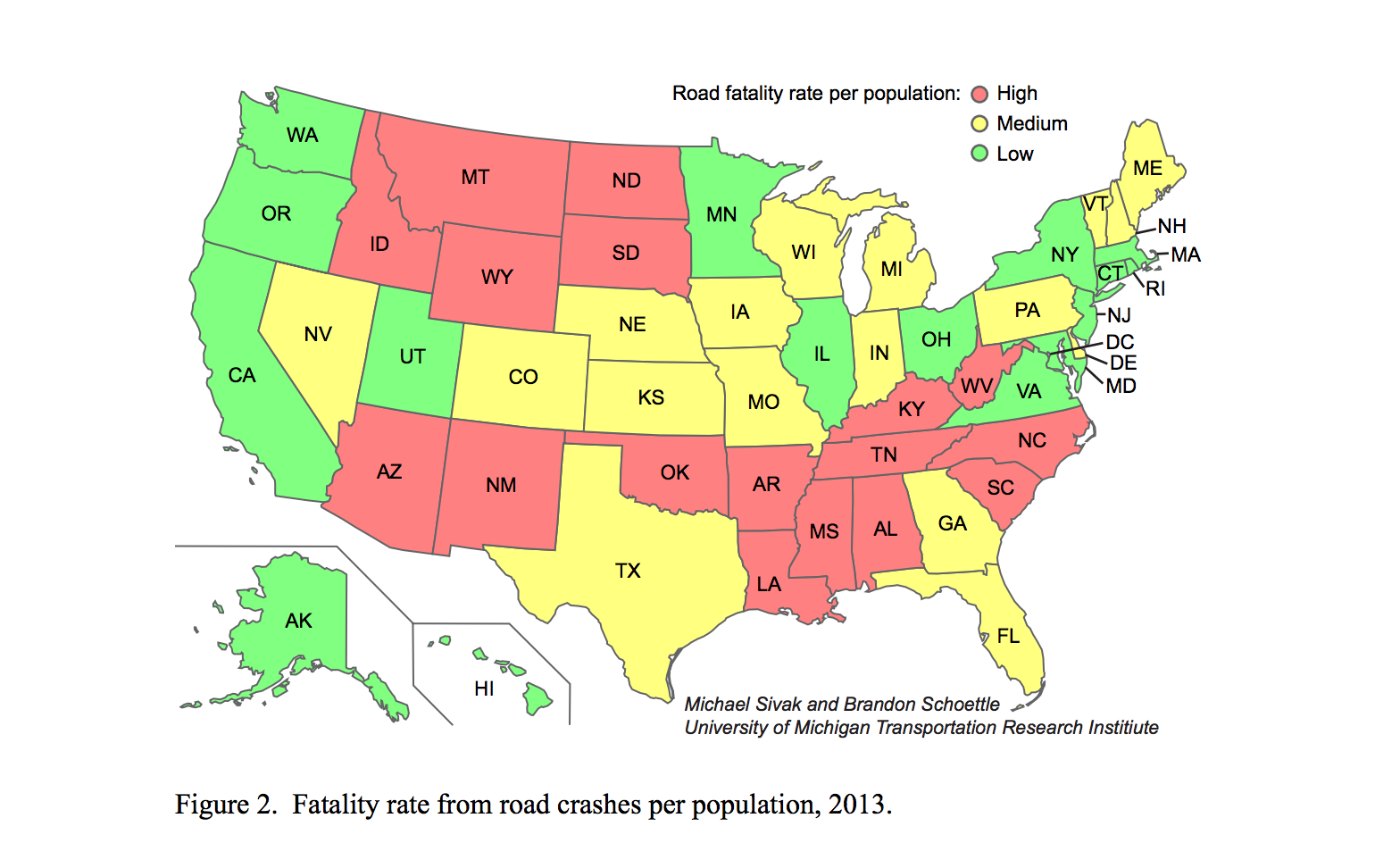
According to the report’s authors, the highest rate of fatalities from road crashes was in Montana (22.6). The lowest fatalities rate was seen in the District of Columbia (3.1).
Reference: Sivak, Michael and Brandon Schoettle. Mortality from Road Crashes in the Individual U.S. States: A Comparison with Leading Causes of Death. October 2015 http://www.umich.edu/~umtriswt/PDF/UMTRI-2015-28_Abstract_English.pdf