
This article was published in Scientific American’s former blog network and reflects the views of the author, not necessarily those of Scientific American
Total carbon dioxide emissions from the energy sector have dropped almost 10% since 2000, according to new analysis from the Energy Information Administration.
All told, the U.S. emitted just under 5.3 billion metric tons of carbon dioxide, versus more than 5.8 billion in 2000. This trend was seen at the state level as well, with the majority (42) of states decreasing total emissions levels over this period. Still, emissions levels – both total and per capita – varied widely among the states.

On supporting science journalism
If you're enjoying this article, consider supporting our award-winning journalism by subscribing. By purchasing a subscription you are helping to ensure the future of impactful stories about the discoveries and ideas shaping our world today.
In 2013, the Texas energy system produced more carbon dioxide than any other state. However, it still managed to decrease its total emissions by 1.7% from 2000-2013. In their new report, the EIA ranked all fifty states in terms of total energy-related carbon dioxide emissions in the state.
As shown in the graph above, Texas produced 641 million metric tons of carbon dioxide versus Wyoming’s 68 in 2013. However, Wyoming is less than 600,000 people compared to Texas’ 26 million.
All told, Wyoming took the top position when state populations were considered by the EIA – with more than five times the per capita emissions than the Lone Star state in 2013 as shown in the graph below.
.jpg?w=1350)
The report also highlighted the impressive growth in wind power in Texas, which has contributed to the state’s decreasing emissions levels. While California led the wind power market in 2000, Texas has surged to the top in terms of electricity generation from wind according to EIA data. In 2013, Texas generated almost three times the number of kilowatt-hours (kWhs) from wind as California.
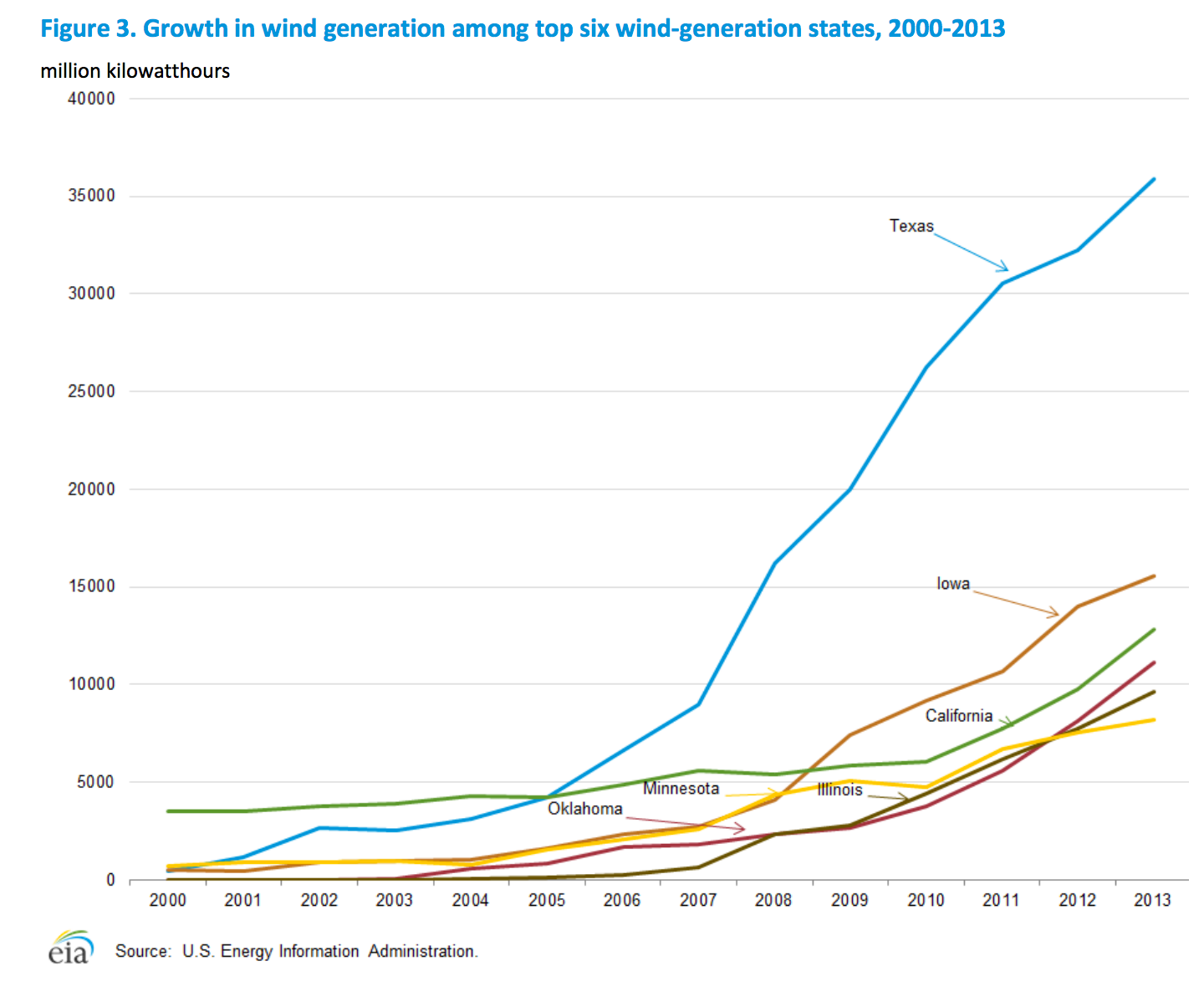
Despite this growth in wind power, Texas’s energy mix is still more carbon-intensive than other states. This is due, in large part due to emissions from industry, which accounted for 30% of the carbon dioxide emissions in the state in 2013. Overall, one-fifth of the industrial sector’s carbon emissions came from Texas.
The EIA's full report is available for free online.