
This article was published in Scientific American’s former blog network and reflects the views of the author, not necessarily those of Scientific American
Scientists have created a technology capable of turning wet sewage into bio-crude according to the U.S. Department of Energy’s Pacific Northwest National Laboratory.
Through a process called “hydrothermal liquefaction” (HTL), scientists create a high pressure (3000 psi) and high temperature (300 degrees C) environment to turn wet sewage (“sludge”) into crude oil. This process mimics the geological conditions that the Earth used to produce petroleum-based crude oil in the ground. According to the press release by Pacific Northwest National Laboratory (PNNL), the HTL technology can “achieve in minutes something that takes Mother Nature millions of years.”
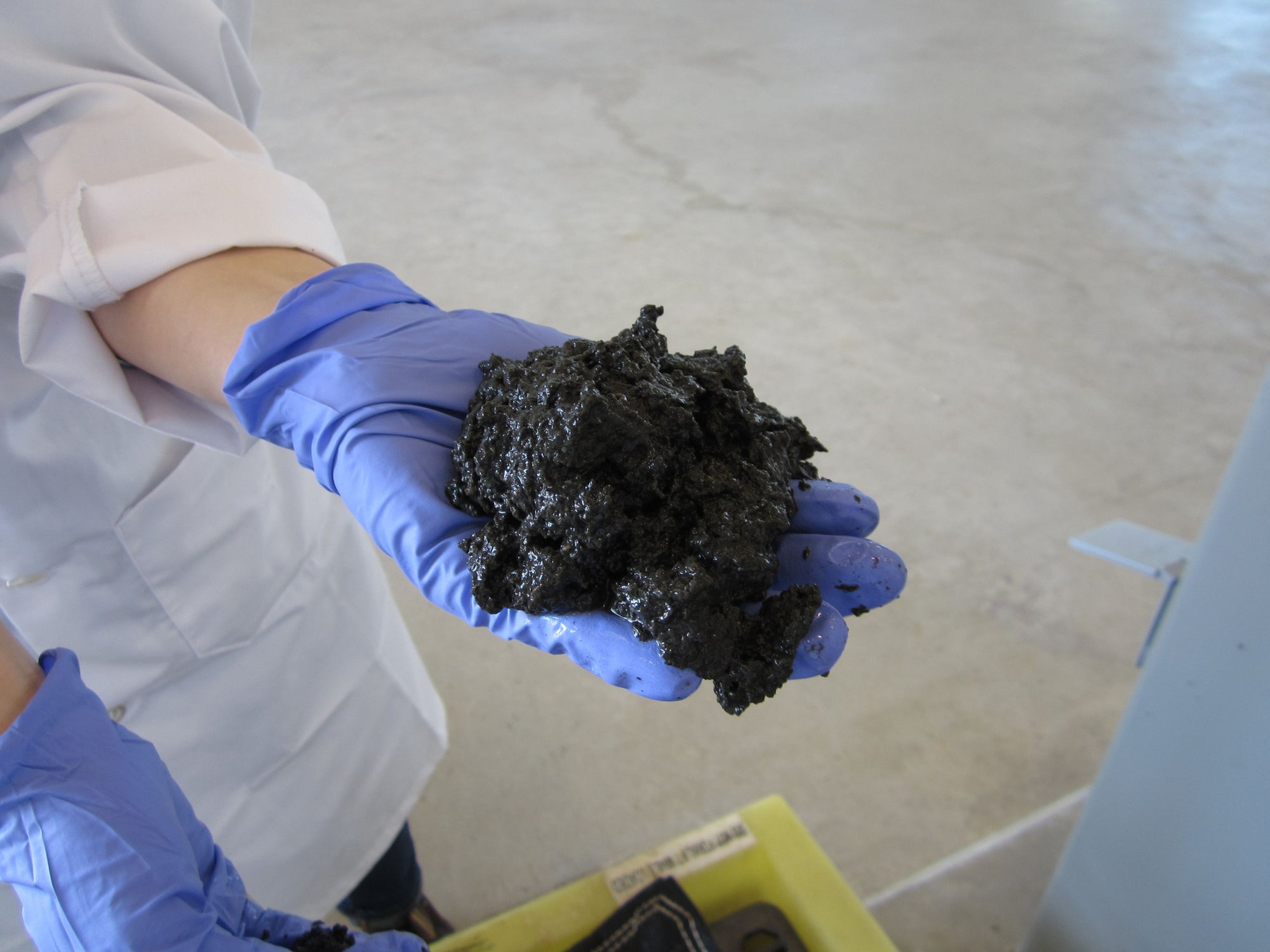
Sludge from Metro Vancouver’s wastewater treatment plant has been dewatered prior to conversion to biocrude oil at Pacific Northwest National Laboratory. Credit: WE&RF
On supporting science journalism
If you're enjoying this article, consider supporting our award-winning journalism by subscribing. By purchasing a subscription you are helping to ensure the future of impactful stories about the discoveries and ideas shaping our world today.
The result of this process is “similar to petroleum pumped out of the ground, with a small amount of water and oxygen mixed in” reports the U.S. Department of Energy. According to scientists at PNNL, human sewage processed using this HTL technology could produce around 30 million barrels of oil per year – the equivalent of 2-3 gallons of biocrude per person per year. This biocrude can then be refined into fuel like its petroleum equivalent.
Wet sewage (“sludge”) has been considered impractical due to the large amount of energy needed to dry the sewage prior to processing. This HTL technology represents a major step forward in the process of developing a technology that can effectively and inexpensively convert the wet biomass into biocrude without the need for expensive drying processes.
This technology has now been licensed to the Utah-based Genifuel Corporation, which is now working to build a demonstration plant in western Canada to test the technology at scale. The plant is expected to come online in 2018, pending successful funding.