
This article was published in Scientific American’s former blog network and reflects the views of the author, not necessarily those of Scientific American
The world’s first floating wind farm is now delivering electricity to Scotland’s grid. Located just over 15 miles off the coast from Peterhead in Aberdeenshire, the 30 Megawatt (MW) wind farm is expected to power around 20,000 households.
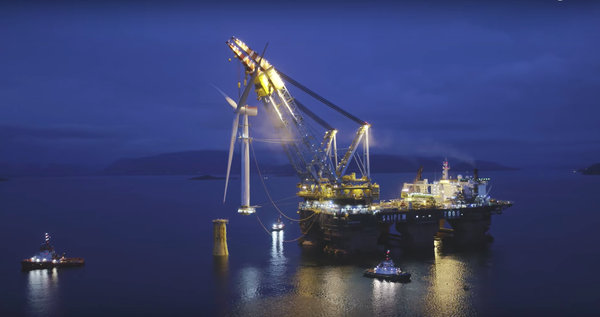
Called the “Hywind Scotland Pilot Park”, the new windfarm includes five large (6 MW) wind turbines and is operated by Statoil in partnership with Masdar. Each of these turbines is attached to the ocean floor using “suction anchors” that are more than 50 feet tall and weigh more than 110 tons. As with anchors on any ship, these devices prevent the turbines from straying too far from their original position as they bob with the waves.
Check out this video (with its epic background music) for a quick run-through of the wind farm’s construction:
On supporting science journalism
If you're enjoying this article, consider supporting our award-winning journalism by subscribing. By purchasing a subscription you are helping to ensure the future of impactful stories about the discoveries and ideas shaping our world today.
In order to smooth the flow of electricity into the Scotish grid, Statoil has also installed one of its “Batwind” lithium batteries. Capable of storing 1 megawatt-hour of electricity, this battery can help smooth the flow of power from Hywind to the grid.
According to Statoil, this project is 16 years in the making. After initially sketching their concept on a napkin, engineers developed technical designs and subsequently built a single full-scale demonstration turbine. This demo was installed off the Norwegian west coast. Learnings from the full-scale demo were then applied to updated designs for the Hywind project.
In Scotland, construction of the pilot park began in June 2016. According to Bloomberg, the 30 Megawatt project came with a quite high price tag of £200 million ($263 million). However, according to Statoil executive vice president, Irene Rummelhoff:
“Statoil has an ambition to reduce the costs of energy from the Hywind floating wind farm to € 40-60 € per MWh [$47-40] by 2030. Knowing that up to 80% of the offshore wind resources are in deep waters (+60 meters) where traditional bottom fixed installations are not suitable, floating offshore wind is expected to play a significant role in the growth of offshore wind going forward.”
Given the rapid declines that have been seen in the cost of other wind power technologies, these ambitions might turn into reality. For now, the windfarm will receive a $185 per MWh subsidy from the British government. This amount is in addition to the $65 per MWh that the wind farm will receive from the wholesale market for the electricity that it generates.
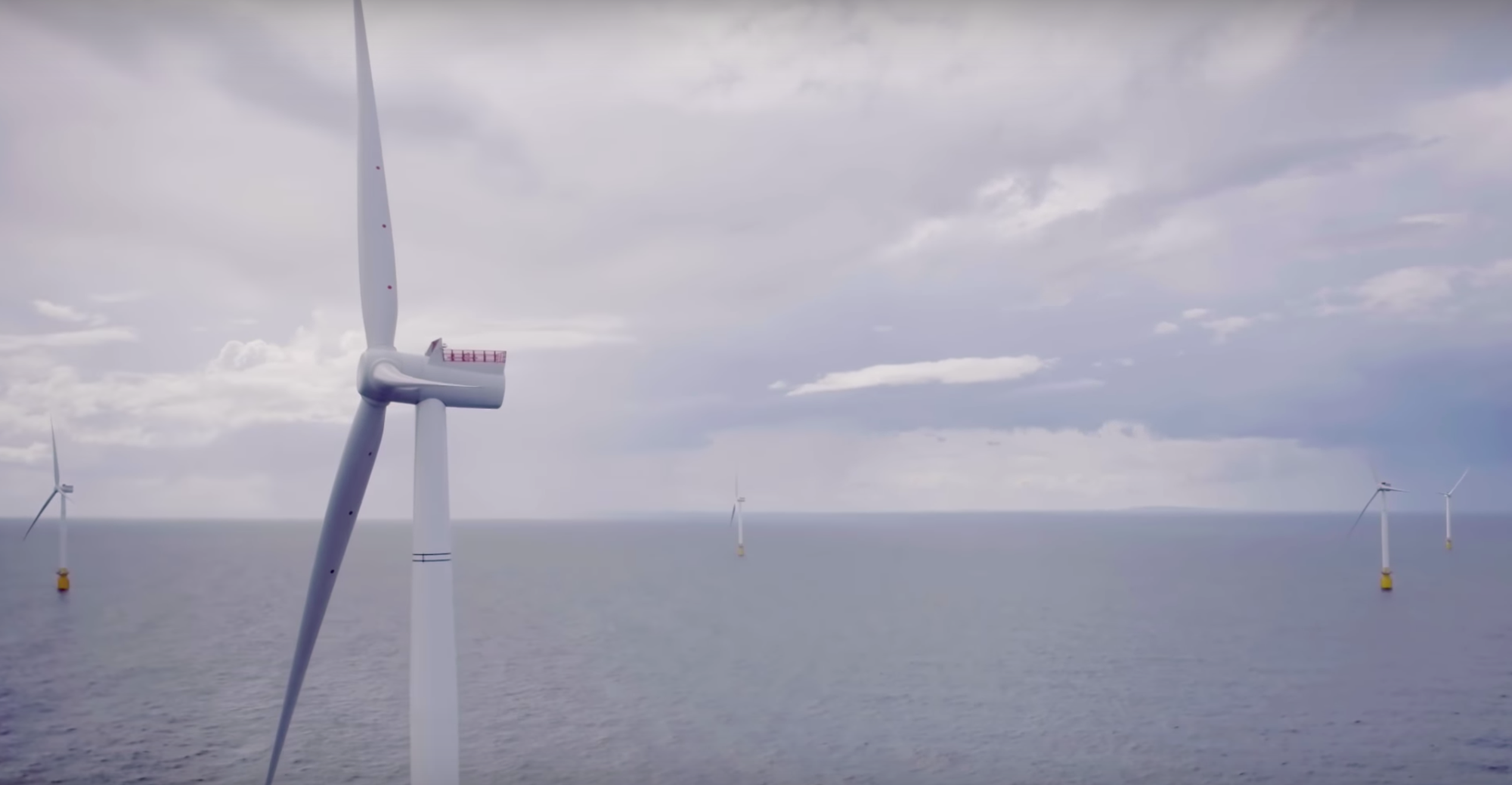
The five floating wind turbines at the Hywind Pilot Park.Credit: Statoil