
This article was published in Scientific American’s former blog network and reflects the views of the author, not necessarily those of Scientific American
When she was growing up in Nairobi, Ugwem Eneyo vividly remembers the lack of reliable access to electricity from the local power grid. According to Eneyo:
“As a middle child, I remember having to go to my backyard to turn on a [diesel back-up] generator multiple times a day...I remember the sound of those generators whirring.”
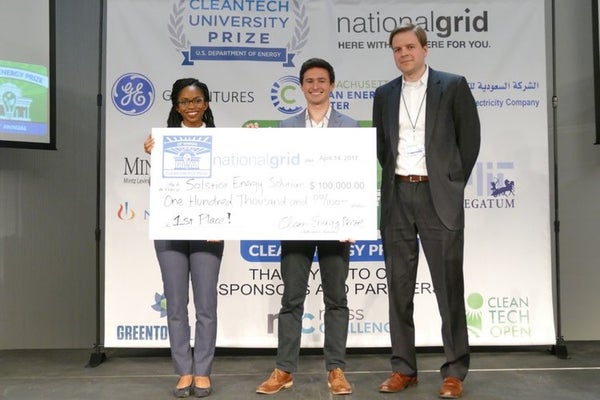
Today Eneyo is a student at Stanford University and has co-founded a company with aims of reducing the impact that these diesel generators have on electricity bills and the environment. Earlier this month, her company took the $100k grand prize at The MIT Clean Energy competition.
On supporting science journalism
If you're enjoying this article, consider supporting our award-winning journalism by subscribing. By purchasing a subscription you are helping to ensure the future of impactful stories about the discoveries and ideas shaping our world today.
Eneyo's company - Solstice Energy Solutions - is working to bring an energy-metering program to homes across Nigeria. The key the program lies in a smart meter and transfer switch hybrid that allows users to manage where their power rcomes from using a mobile app. This switch has been aptly named "Shyft" and is intended to replace the manual changeover switches like the one Eneyo had to use during her childhood when the power grid would fail.
The app not only allows a household to switch automatically to a backup generator when the power grid fails but also allows users to choose when to start up their generator, so they can reduce costs wherever possible. According to estimates by Eneyo and her colleagues at Solstice, their Shyft system can decrease a household' energy costs by up to 30 percent.
The company plans to use their $100k in prize money from the MIT competition to fund their product's "beta phase" and hope to begin selling their product next year.