

This article was published in Scientific American’s former blog network and reflects the views of the author, not necessarily those of Scientific American
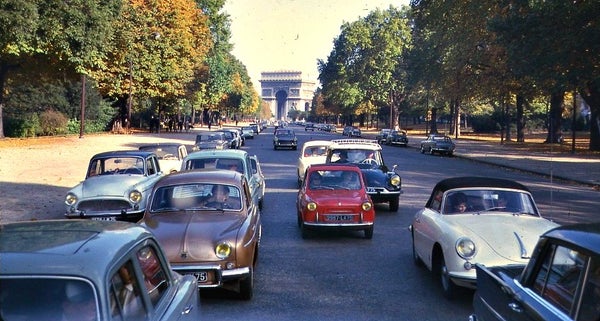
On September 27th, Paris will have une journée sans voiture (a day without car). For the first time, no motorized vehicles will be allowed to drive in the city.* In addition to providing some amazing picture-taking opportunities, this car-free day could show us how dramatic shifts in city transportation networks could impact urban air quality.
Like many other cities, Paris has struggled with air pollution. In 2014, local pollution levels were so high that the government temporarily removed public transportation fees and partially banned cars from the roads. According to data released by Airparif, this response led to a drop in Paris road traffic of 18% and 6-30% drop in air pollution levels.
According to Paris Mayor Anne Hidalgo, on September 27th:
On supporting science journalism
If you're enjoying this article, consider supporting our award-winning journalism by subscribing. By purchasing a subscription you are helping to ensure the future of impactful stories about the discoveries and ideas shaping our world today.
“Paris will be completely transformed for a day. This is an opportunity for Parisians and tourists to enjoy the city without noise, pollution and therefore without stress.”
The majority (51%) of overall particulate matter (PM) air pollution in the Paris region comes from transportation. This type of pollution is a mix of liquid and solid particles that can contain sulfates, nitrates, ammonium, carbon, metals, and an array of allergens. The World Health Organization (WHO) has set recommended concentration levels for PM air pollution to avoid the potential negative health impacts of different pollutants (including asthma and other respiratory illnesses, lung cancer and cardiopulmonary disease). Globally, an estimated 800,000 early deaths occur each year as the result of combustion-related air pollution.

Arc du Triomphe in Paris at night by Duncan Hull - CC2.0
*except a few essential vehicles, such as ambulances