
This article was published in Scientific American’s former blog network and reflects the views of the author, not necessarily those of Scientific American
Wind turbines in the United States have grown both taller and stronger over the past decade, according to analysis by the Energy Information Administration (EIA).
Today, the weighted average wind turbine in the United States is about 280 feet (~85 meters) tall with an electricity generating capacity of just over 2 Megawatts (MW). According to the EIA’s analysis, the biggest wind turbines can currently be found generating in the Block Island Wind Farm in Rhode Island. This wind farm is the only operating offshore wind farm in the United States, though two projects – in Ohio and Virginia – are slated to come online in the next few years.
.png?w=1350)
Credit: U.S. Energy Information Administration, Annual Electric Generator Report, Form EIA-860
On supporting science journalism
If you're enjoying this article, consider supporting our award-winning journalism by subscribing. By purchasing a subscription you are helping to ensure the future of impactful stories about the discoveries and ideas shaping our world today.
On land, Texas is standing tall, with the largest onshore wind turbines found in the United States at 4 MW each. The Lone Star State is also home to the Horse Hollow Wind Energy Center, which is currently the world’s largest wind farm with its 420 wind turbines, which are spread out across 47,000 acres. All told, the Horse Hollow wind farm has an electricity generating capacity of 735 MW.
This trend toward taller wind turbines matters because wind speeds are frequently higher as you get further above the ground. So, taller turbines mean more electricity from wind power.
In the photos below from the National Renewable Energy Laboratory (NREL), one can see average wind speeds in the United States at 30 meters (~98 feet) from the ground, 80 meters (~262 feet), and a bit higher at 100 meters (~328 feet).

Average wind speeds at 30 meters from the ground. Credit: NREL

Average wind speeds at 80 meters from the ground. Credit: NREL
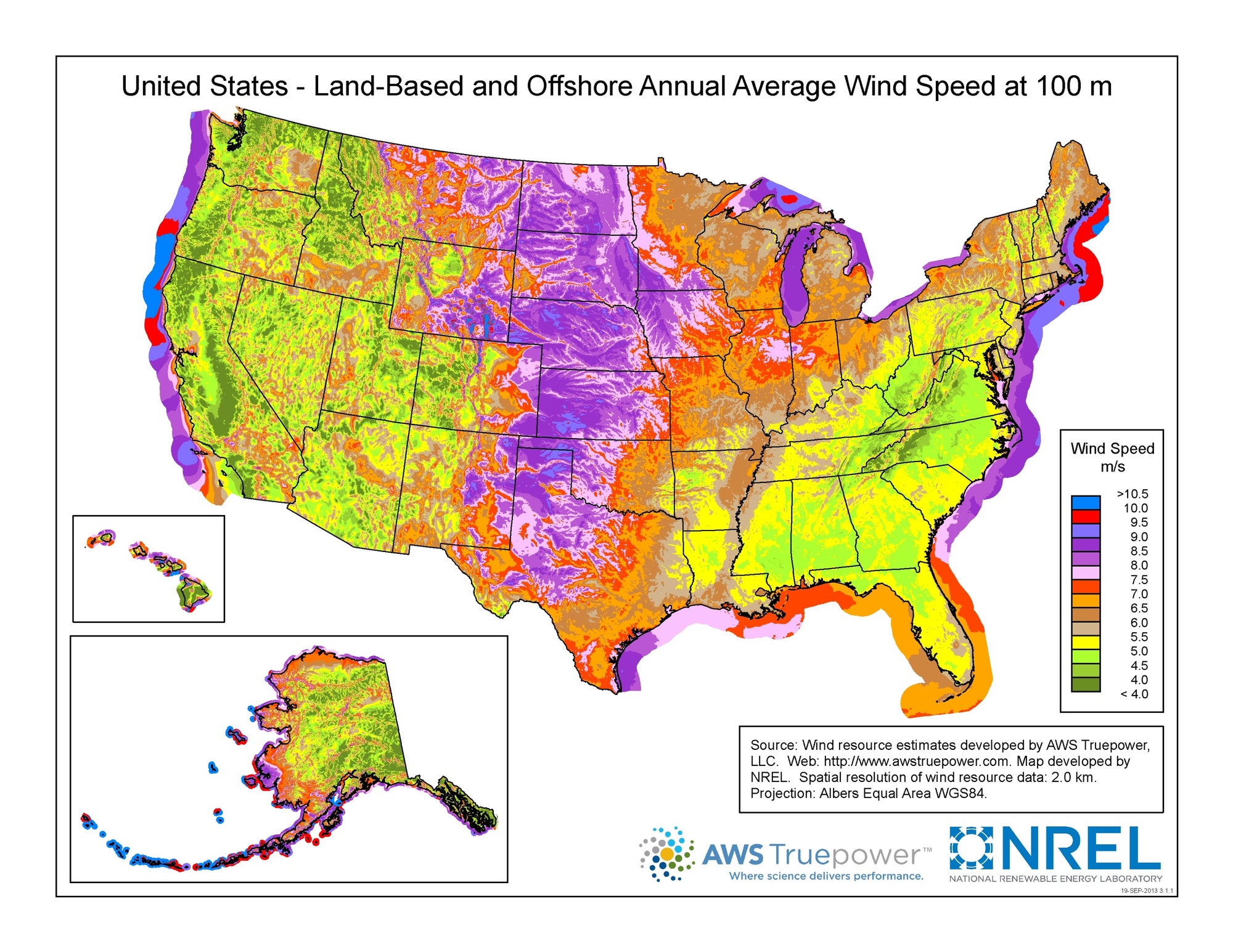
Average wind speeds at 100 meters from the ground. Credit: NREL