
This article was published in Scientific American’s former blog network and reflects the views of the author, not necessarily those of Scientific American
In 2016, Emily Grosvenor declared June 17 to be World Tessellation Day. It was not only the publication date of her children’s book Tessalation! about a girl who sees shapes and patterns everywhere (disclosure: I contributed to the book's Kickstarter), but also math-inspired artist and tessellateur extraordinaire M. C. Escher’s birthday. It’s almost June 17 again, so it’s time for round 2.

A rectangle-forward tiling in a building in Cork, Ireland. Credit: Evelyn Lamb
A tessellation or tiling is a way to cover something, usually a flat two-dimensional surface, by shapes that fit together perfectly so there are no gaps. Usually when people think about tessellations, they imagine repeated patterns of polygons in the plane or shapes based on those patterns, like Escher’s fanciful frogs and fishes. But organic shapes or shapes that don't repeat in a regular pattern are also valid tessellations.
On supporting science journalism
If you're enjoying this article, consider supporting our award-winning journalism by subscribing. By purchasing a subscription you are helping to ensure the future of impactful stories about the discoveries and ideas shaping our world today.
Last year I saw several posts about how to celebrate Tessellation Day. Grosvenor wrote one. John Golden and Brent Yorgey wrote some. I wrote one myself. They have a lot of fun ideas in them, especially for how to play with tessellations with kids.

A pentagonal tiling on the floor in the Mathematical Association of America headquarters in Washington, D.C. Credit: Evelyn Lamb
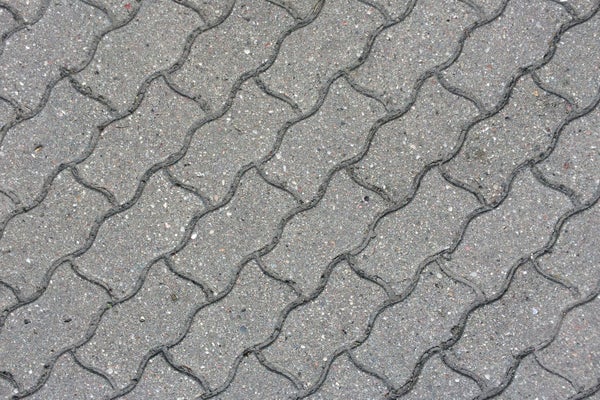
But you can also keep it simple. Look down. City planners and building designers frequently treat us to beautiful and interesting patterns in pavement and floor coverings. Looking down as you stroll through a new city or building, these patterns can surprise and delight you. Interesting tessellations are like Easter eggs for math enthusiasts and pattern aficionados to discover as they go about their daily business.
I’ve already written about how much pleasure an octagonal sidewalk tiling pattern in Germany brought me. A few months later, a trip to Toruń, Poland — coincidentally the birthplace of Nicolaus Copernicus — became a treasure hunt as I saw pattern after delightful pattern under my feet. I saw quadrilaterals, pentagons, hexagons, octagons, dodecagons (12-sided polygons), and hexadecagons (16-sided polygons), with multiple incarnations of many of them. The guidebooks don’t tell you what an embarrassment of riches Toruń has when it comes to mathematically interesting floor coverings! British recreational math enthusiast David Bailey has a beautiful gallery of pavement tessellations from around the world on his page Tess-elation. The pictures he’s posted give me hope that one day I’ll look down to see a 10- or 14-sided polygon paving the way for me.


A tiling of the sidewalk by dodecagons greeted me when I got off the plane in Bydgoszcz, Poland on my way to Toruń. Credit: Evelyn Lamb
I’ll be posting a new ground-level tessellation this week on Instagram. I hope you’ll follow along or, better yet, play along by spotting and posting your own. You can use the hashtag #WorldTessellationDay if you want to share your findings on social media.
For more information about tessellation and World Tessellation Day:
Emily Grosvenor's 23 ways to celebrate World Tesselation Day The World Tessellation Day Facebook group John Golden's tessellation resources and his post about Islamic tiling designs Brent Yorgey's World Tessellation Day blog post from 2016 Laura Taalman's page about 3-d printing all the tiling pentagons David Bailey's Tess-elation page Anneke Bart and Bryan Clair's Math and Art of M. C. Escher wiki