

This article was published in Scientific American’s former blog network and reflects the views of the author, not necessarily those of Scientific American
My neighborhood isn’t exactly sleepy, but the traffic isn't too bad. Sometimes I can even cross intersections diagonally while I take a walk. On one recent walk, I started wondering how much distance I save myself with my little hypotenuse trick, so when I got home I measured our intersection. Blocks in my neighborhood are approximately 400 feet long, and streets are approximately 40 feet wide.
Based on those numbers, I used the Pythagorean theorem to figure out that I would walk about 460 feet if I walked along a block and cross an intersection on the diagonal or 480 feet if I crossed both streets separately, a savings of about 5% of the distance. It’s not terrible, but it’s not a lot either. Stopping to pet just one cat would probably wipe out any time savings on an average walk. (Worth it!)
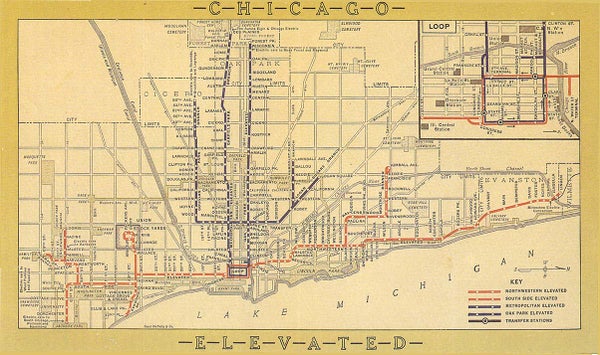
In contrast, behold Chicago! In May, I stayed just off of Milwaukee Avenue during a visit to Chicago. Milwaukee runs from the west part of downtown Chicago almost all the way up to the Wisconsin border. It changes its precise compass bearing a few times during the trip, but it starts out at almost exactly a 45 degree angle, the perfect hypotenuse to the rest of Chicago’s street grid.
On supporting science journalism
If you're enjoying this article, consider supporting our award-winning journalism by subscribing. By purchasing a subscription you are helping to ensure the future of impactful stories about the discoveries and ideas shaping our world today.
The event I was attending was northwest of my hotel, and I almost wept at the beautiful efficiency as I walked along Milwaukee. The unconventional six-way and mid-block intersections are a small price to pay for the pleasure of walking along a glorious hypotenuse. The city’s most-used bike lane is along Milwaukee. A cyclist can ride from their Logan Square abode through the chocolatey air of River West and to downtown in only 70% of the time it would take on the rectilinear streets of the grid.
Milwaukee has been an important road for Chicago since before white settlers established the city we now know by that name. It was used by Native Americans long before their land was taken by the American government, as this article about the avenue describes.
Milwaukee is not the only hypotenuse in Chicago. The city is lousy with them. Grand, Clybourn, Lincoln, Ogden, and several other streets cut jaunty angles across the city, disrupting the tidiness of the grid and saving pedestrians and cyclists a few steps or twirls of the pedals. The next time you're in Chicago, after you've enjoyed the fantastic food, striking architecture, and beautiful lake, a long walk might help you appreciate the city's hypotenuses.