

This article was published in Scientific American’s former blog network and reflects the views of the author, not necessarily those of Scientific American
A few years ago, a hip-hop musical about the founder of our financial system seemed laughable. But creative genius Lin-Manuel Miranda showed us all it could be a mega-hit. And the parodies, oh, the parodies! Batlexander Manilton, I am not throwing away my Spock, William Henry Harrison, Jeb! An American Disappointment. The list goes on.
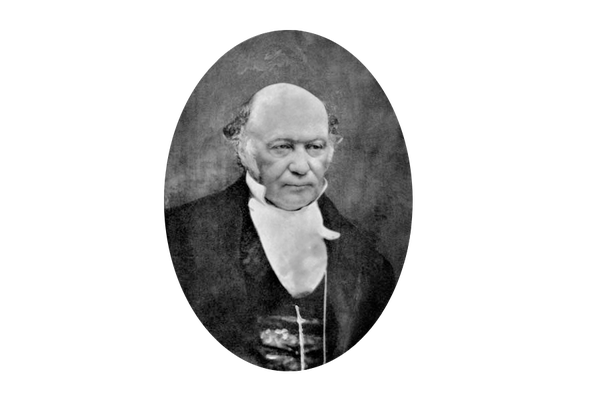
Who else deserves this treatment? Obviously, the great Irish mathematician and physicist William Rowan Hamilton, whose name has exactly the same number of syllables and emphasis pattern as Alexander Hamilton. It writes itself!
Well, I wish it did. In reality the parody does not write itself. I know because I tried to write one for a few months, and while some parts came easily, I hadn't been able to create something I was happy with. So it is with a mixture of relief and regret that I share this fantastic video by A Capella Science (Patreon) and other science Youtubers. (My small consolation is that I had Hamilton singing “ijk” in the same place as they do. I'll chalk it up to great minds thinking alike.)
On supporting science journalism
If you're enjoying this article, consider supporting our award-winning journalism by subscribing. By purchasing a subscription you are helping to ensure the future of impactful stories about the discoveries and ideas shaping our world today.
The performers do a great job fitting Hamilton’s love life, alcoholism, study of optics, and invention/discovery* (this blog tries to remain neutral on the matter of formalism vs. Platonism) of the quaternions, into one compelling song (lyrics here), and I picked up some fun facts while I listened. I was curious about the "prodigious Vermonter" at the beginning of the song. It was Zerah Colburn, a child prodigy with impressive mental calculation abilities. His father took him to Ireland when he was 13, and he and eight-year-old William Rowan Hamilton had calculating contests and may have sparked Hamilton to take more of an interest in math.
If the universe is still taking Hamilton parody requests, I’d love “It’s quiet upstairs,” a song about the effect of the great purge of 1933 on the Göttingen math department, which lost such luminaries as Emmy Noether, Edmund Landau, and Hermann Weyl. “If you see David Hilbert in the street, walking by himself, talking to himself, have pity.…”