
This article was published in Scientific American’s former blog network and reflects the views of the author, not necessarily those of Scientific American
There's something about older lava flows that I love quite a bit. You know, the ones that are old enough to have mellowed a bit, but not so old that they've had stuff grow all over them yet. It's probably an artifact of growing up with Sunset Crater in Arizona, but that thing seemed almost all lava flow. The flows on the San Francisco Peaks were old and obscured. So the ones on Pacific Northwest volcanoes charm me: they're huge, yeah, but rather wee things compared to the size of the mountains that spawned them. And they're often surrounded by such lush greenery, or they're hard bits in large expanses of loose pyroclastic materials. It really makes them pop.
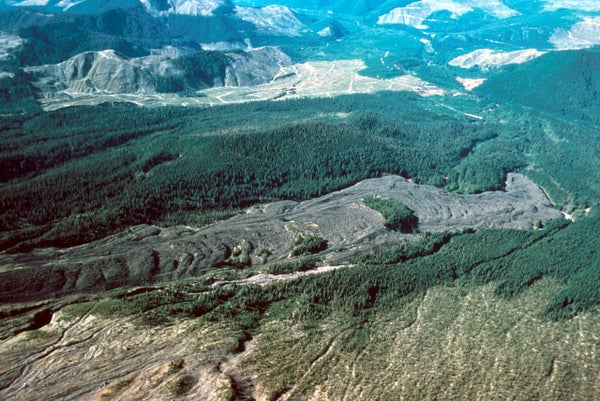
This is the lower bit of the Floating Island lava flow on Mount St. Helens. This beauty is extremely young: it only erupted sometime in 1799-1800. It was on the north-northwest flank, and it's quite hard to see now on account of the debris avalanche and lateral blast that mangled the northern side of the volcano. This is what it looked like before May 1980. Wonderful, wasn't it?
On supporting science journalism
If you're enjoying this article, consider supporting our award-winning journalism by subscribing. By purchasing a subscription you are helping to ensure the future of impactful stories about the discoveries and ideas shaping our world today.
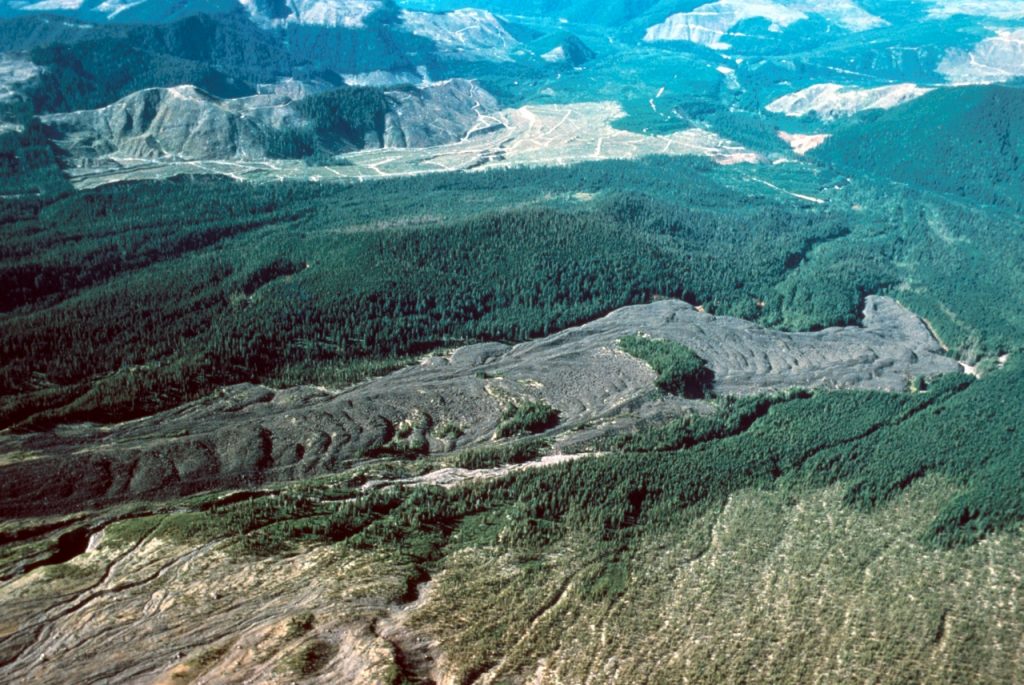

There's an exceptional example of a kīpuka here: see that island of forest in the island of lava? There's more than one, but it's the big crescent-shaped one I'm looking at just now. Something got in the way of the lava flow here. Maybe there was a ridge, or a ravine, or something else that made it flow around like water split by a protruding stone. And so we have this patch of forest that was once surrounded by molten stone, surviving and thriving happily while everything around it perished.
Kīpukas aren't always filled with forest, but they're always distinct from the surrounding young flow, even if they just happen to be older rock. And there. Now you've seen a bit of Mount St. Helens as she was, and learned a Hawaiian term for a really neat bit of lava flow morphology. See if you can find a kīpuka of your own the next time you explore one of your favorite volcanoes.