
This article was published in Scientific American’s former blog network and reflects the views of the author, not necessarily those of Scientific American
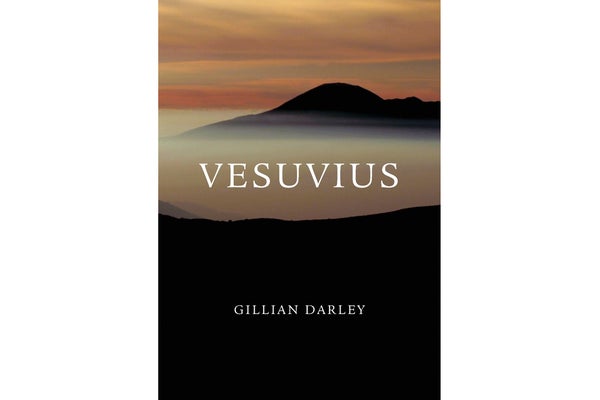
There are a few non-fiction books that can transport you through time and space, science and culture, and constantly delight you with unexpected cameos. Gillian Darley's Vesuvius is one.
For as famous as Vesuvius is, there aren't actually that many books about it. Plenty of books like to talk extensively about Pompeii, with only a few bare facts about the volcano that simultaneously destroyed and preserved it. Plenty of books about volcanology dedicate a chapter to it. But as far as books just about the volcano, there's just a few, and one of those is written by my least favorite volcano writer. So I was quite excited to find Gillian's book, and more excited still to discover that she's a skilled wordsmith.
She starts off with the intriguing experience of a fake Vesuvius, built by a German prince. And from the beginning we're immersed in the narrative, fighting a raging storm in a small boat, and from there, introduced to a volcano that has enthralled countless scientists and laypeople since Pliny the Elder and Younger. It may seem bizarre to begin a book about the real volcano by introducing us to an artificial one, but there's good purpose to this. Prince Franz is the first of many people we'll meet who found themselves captivated to obsession by Vesuvius.
On supporting science journalism
If you're enjoying this article, consider supporting our award-winning journalism by subscribing. By purchasing a subscription you are helping to ensure the future of impactful stories about the discoveries and ideas shaping our world today.
Darley sketches both volcano and volcano-lovers with a deft, empathetic hand. Even brief mentions of the many people whose encounters with Vesuvius left them fascinated and stricken are infused with personality. And she shows us how they all sought to understand the striking and at times horrifically violent mountain. Some approached it through art, others through science, but all wanted to comprehend its power.
We meet the expected folks, of course. The Plinys make their appearance early on, and later we spend a great deal of time with Sir William Hamilton, who was utterly smitten by Vesuvius to the end of his days. But there are also people we might not have expected: Goethe, the Shelleys, Dickens, and Dali. Scientists many of us may remember from science classes pop into the story here and there: Michael Faraday, for one, and even Sigmund Freud. The fathers and grandfathers of geology put in their appearances: Charles Darwin and Charles Lyell, Hutton and Humboldt, among others, plus a memorable encounter with Frank Perret, who would go on to risk his life figuring out Mont Pelée. It seems everyone who is anyone, noble or common, artist or scientist, businessperson or dilettante, has found themselves deeply affected by Vesuvius at some point.
And, remarkably, the women of the mountain are not overlooked. We get to meet a dazzling array of women who observed, investigated, and closely studied the volcano. Katherine Wilmot and Martha Coffin Derby descend into the smoking crater, and describe its appearance in vivid detail. The Duchess of Devonshire, a famous beauty whose stolen painting inspired the infamous Professor Moriarty, is shown to have a mind as brilliant as her looks, "immers[ing] herself in 'chemistry' and the study of minerals during her time in Naples"; she brought samples of Vesuvius's eruptive products and a keen passion for volcanoes with her when she returned to England. Many more women visit and come away with vivid memories, some finding their way into travel literature, some into novels.
Mary Somerville and her daughters are most fascinating of all, a trio of women who closely studied Vesuvius's eruptions and their affects, even at grave risk to themselves. Mary was one of the few women of that time welcomed into the Accademia Pontaniana as an honorary member. Women could do science, were doing science, with the best of the men, and here their accomplishments aren't hushed or ignored. It's marvelous.
Darley weaves geology throughout the book and also devotes a chapter solely to the many geologists who studied Vesuvius. There's more history than cutting edge here, but it's fascinating, and watching understanding unfold is a treat.
Towards the end, we get an intimate look at Vesuvius's most recent eruption hearing and feeling and smelling as well as seeing the lava flows devour entire portions of towns. We see how even those sharp memories fade: 1944 seems long ago when you're tempted back into the red zone by fertile land and gorgeous views.
In the end, reading this book, you'll gain a keen understanding of this civilization-devouring mountain and how it has enthralled so many for so long. And you'll come away hungry for Italy's other fire mountains. If you want the history and science and art and culture of Vesuvius delivered in on beautifully-written book, this is the one. Enjoy your Grand Tour of one of the most famous volcanoes in human history.