
This article was published in Scientific American’s former blog network and reflects the views of the author, not necessarily those of Scientific American
We got a present from the Juan de Fuca Plate, which is subducting under the North American Plate: a slow earthquake! Did you even know an earthquake could be slow? We're used to thinking of earthquakes as events that happen over seconds to a few minutes and produce a lot of shaking, but some earthquakes actually mosey along over hours or days, their trembling so gentle only seismometers can recognize it. One of these earthquakes started in the Cascadia Subduction Zone on December 21st and has been making its slow way south from Vancouver Island, British Columbia, Canada ever since.
Shelley Chestler at the Pacific Seismic Network has an excellent article on it. It's a feast of helpful illustrations and a clear explanation of what's going on, and I encourage you to read it in full if you want to know more about what's going on around one of the most dangerous fault zones in North America.
On supporting science journalism
If you're enjoying this article, consider supporting our award-winning journalism by subscribing. By purchasing a subscription you are helping to ensure the future of impactful stories about the discoveries and ideas shaping our world today.
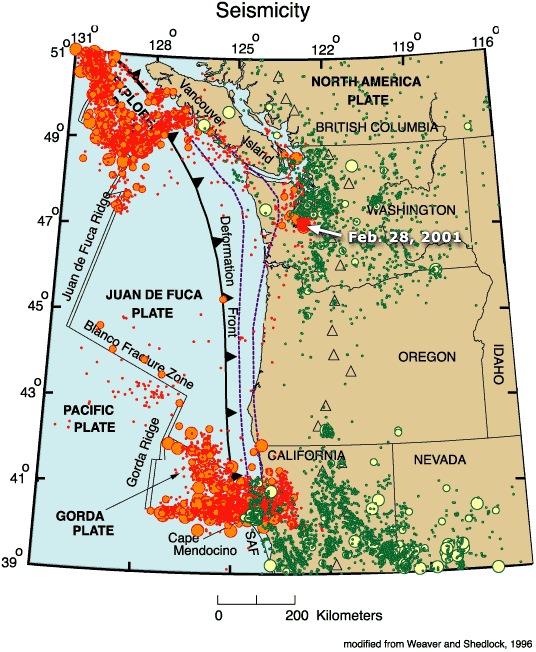
I'm terrified of Cascadia, so you'd think I'd be freaked out about now, right? But no, I'm totally relaxed. This is all completely normal stuff for this area. We do, of course, need to be aware of the dangers and not let normal lull us into a false sense of invulnerability. Subduction zones like Cascadia regularly produce enormous, devastating quakes, and we've got to be ready for when, not if, the Big One comes. But the current activity isn't reason to panic.
It is a reason to geek out, however! You can watch a very fun video showing four years of tremors in the Cascadia Subduction Zone here. It gives you an excellent sense of how active this place is! If you're intrigued, you can find out more about the tremors here. For a map of subduction zones worldwide, click here.
Subduction zones are terrifying. But they're also some of the most interesting and beautiful places on Earth, which is why I'm quite happy to live in one despite the danger!