
This article was published in Scientific American’s former blog network and reflects the views of the author, not necessarily those of Scientific American
Meet Oregon's state rock, the thunder egg. They're amazing little things. Look at the outside, and you'd never suspect what's inside:
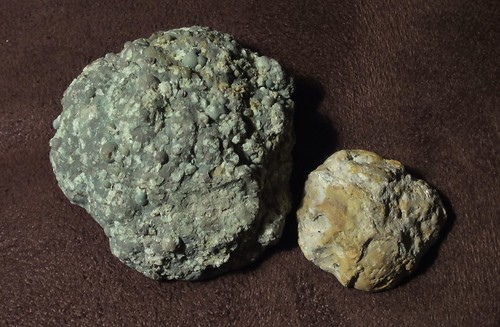
Thunder eggs from the outside. Credit: Dana Hunter
It's only when you cut them open that you see they're more than little round or egg-shaped rocks. You can end up with something exuberantly happy (Janet Vida Watson would have adored this rock). You can end up with something that looks like North America stretched out like taffy. Or you can end up with the bat signal:

On supporting science journalism
If you're enjoying this article, consider supporting our award-winning journalism by subscribing. By purchasing a subscription you are helping to ensure the future of impactful stories about the discoveries and ideas shaping our world today.
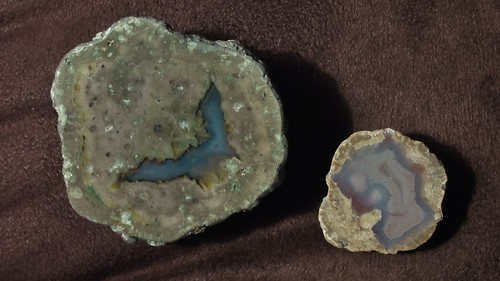
Thunder eggs from the inside. Credit: Dana Hunter
Thunder eggs may look calm and cool, but they're born in fire. They form in a volcanic rock called rhyolite. It's amazing what rhyolite gets up to. In this case, little nodules have formed within the lava flow and filled up with all sorts of delicious chalcedony. If you want to learn all about them, the Ore Bin has a nice PDF on how they became Oregon's state rock and how they form.
You can find your very own thunder eggs online and at rock shops everywhere. Make sure you leave yourself enough time to go through them thoroughly in search of that perfect pattern. You might get lucky and find something special!
I found my bat signal rock at Lava Lands Visitor's Center, which is dedicated to all things Oregon volcanic. They had a nice bin full o' bits of the rock types you find round Newberry Crater, collected from the area, which was awesome. And, of course, they had numerous examples of Oregon's state rock, including this specimen destined to delight any Batman fan.
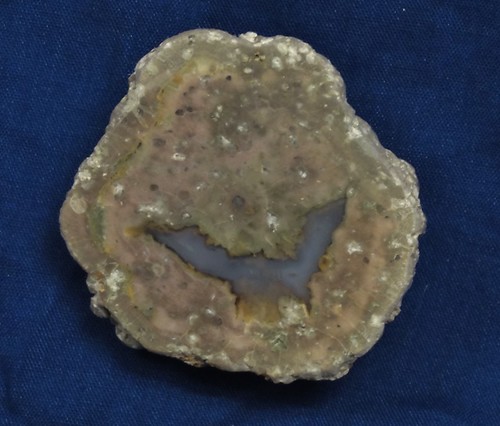
A bat signal suitable for all geology geeks! Credit: Dana Hunter
They make eggcellent Easter Fools Day gifts, so lay up a stock for the next time Easter falls on April 1st!