
This article was published in Scientific American’s former blog network and reflects the views of the author, not necessarily those of Scientific American
Vantablack! The darkest, blackest substance ever created by humans, inspiring awe and knee-quivering in fine artists worldwide. And it has fallen into the clutches of a megalomaniacal fine art supervillain.
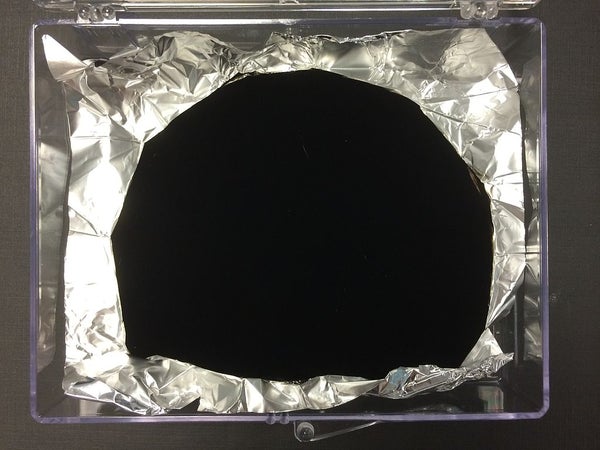
A photo of Vantablack on crumpled aluminum foil from Surrey NanoSystems. I'm probably in trouble just for showing it to you on an art blog.
Vantablack, created by Surrey NanoSystems is made of carbon nanotubes, and insidiously feels just like the substrate onto which it is applied, while rendering it virtually "unseeable" by drinking in all light like those creatures in that hype movie Attack the Block starring the awesome John Boyega.
On supporting science journalism
If you're enjoying this article, consider supporting our award-winning journalism by subscribing. By purchasing a subscription you are helping to ensure the future of impactful stories about the discoveries and ideas shaping our world today.

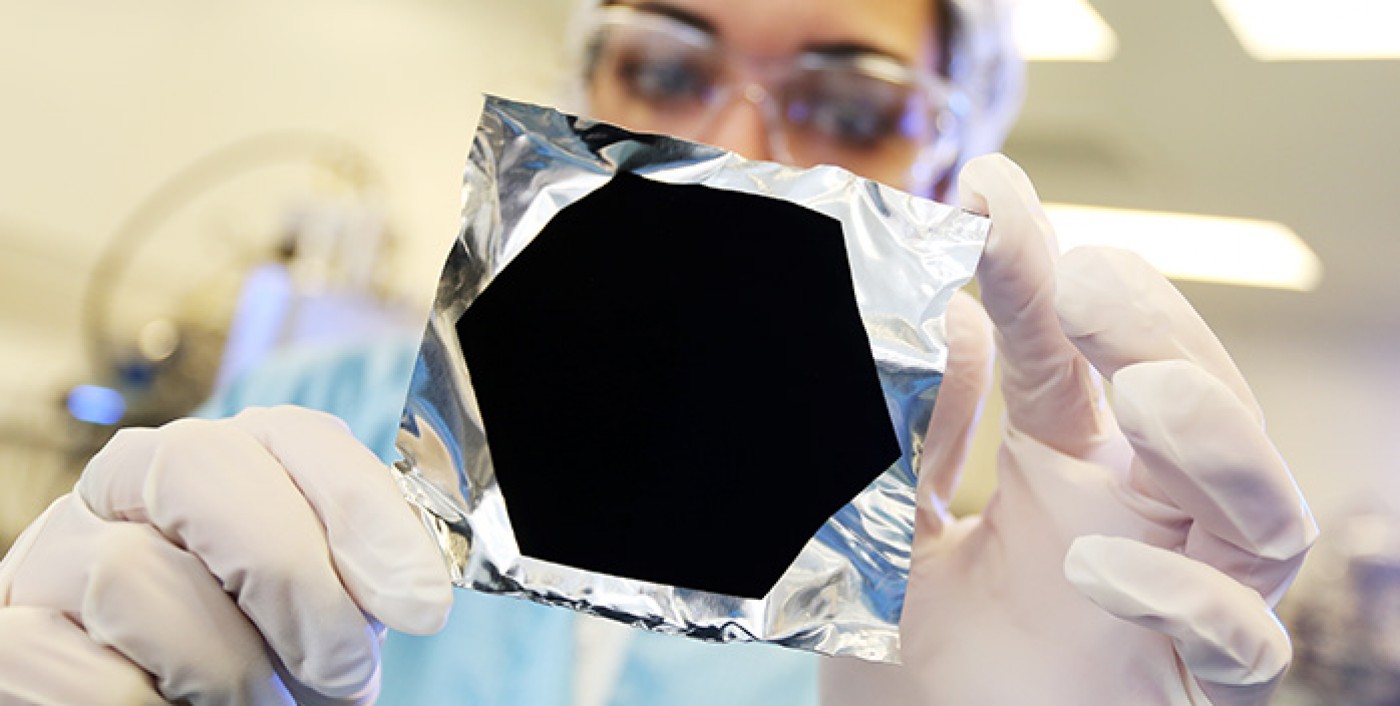
File photo of Surrey NanoSystems*
As reported on Hyperallergic and ArtNet, Surrey NanoSystems have granted exclusive use of Vantablack in the field of art to sculptor and giant jelly bean maker Anish Kapoor.
Kapoor, also known as the sculptor who caused widespread madness in Chicago by depositing a giant reflective jelly bean suspiciously known as the "Cloud Gate" (his words) in Millennium Park, has said that Vantablack,
"rests on the liminal edge between an imagined thing and an actual one. It’s a physical thing that you cannot see, giving it a transcendent or even transcendental dimension, which I think is very compelling...Outside of my project, Vantablack is being developed for military stealth and technologies where one needs to restrict the use of light"

Anish Kapoor, reflected in Cloud Gate as he conquers the city of Chicago in 2006. [source]
This makes Kapoor the world's greatest fine art supervillain since Jenny Holzer took over Times Square.

(All Hail Queen Holzer)
Other fine artists, including evopunk painter Flying Trilobite, have vowed to create their own illicit Vantablack production lab, restoring the power of this art material to fine artists, and the world.
Hopefully announcing my illicit Vantablack pigment production lab any day now. #HaHaIDontThinkSoKapoor https://t.co/lu5GeGKmnC
— Glendon Mellow (@FlyingTrilobite) February 29, 2016
Flying Trilobite claims he just needs a successful Kickstarter and the backing of secret benevolent government agencies to wrest Vantablack's power from Conqueror Kapoor and his hazmat-suited minions at Surrey NanoSystems.
This author wishes Flying Trilobite luck in saving the fine art world from CERTAIN DOOM.
___
*Not really Surrey NanoSystems: A.I.M. Advanced Idea Mechanics drawn by Jack Kirby, Marvel Comics. **This is all satire about a depressing fine art world / #sciart development.