
This article was published in Scientific American’s former blog network and reflects the views of the author, not necessarily those of Scientific American
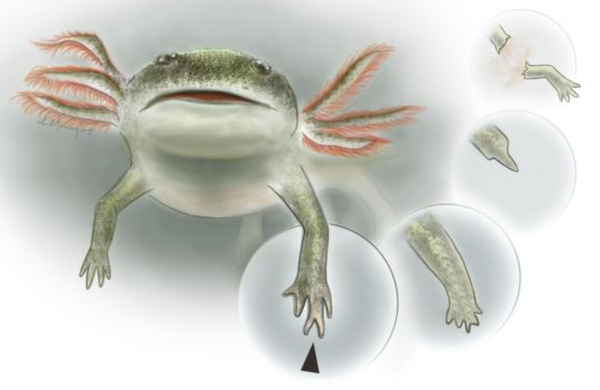
For all of you lovers of gore who plan on parading around with severed limbs this week, consider this: If evolution hadn't gotten all fancy with how it builds our arms and legs, we might be able to regenerate limbs as easily as salamanders who can regrow limbs throughout their lifetimes. I can't decide if this would make the severed-limb costume more or less exciting, but in the Nature paper that just came out discussing this revelation, I am proud to say that I illustrated the press release with... guess what! That's right: severed limbs. Convenient timing don't ya think? For the record, when I did the illustration I had no idea it would come out the week of Halloween. Muah-ah-ahhhh!
Regeneration faded as most four-legged vertebrates evolved https://t.co/WoKPJCEWd1 pic.twitter.com/opHPMaCKHJ
— Brown University (@BrownUniversity) October 26, 2015For those interested in the nuts and bolts of how researchers Nadia Fröbisch et. al figured out that certain fossil species could regenerate their limbs and tails, the original Nature paper and the Brown University press release explain the findings in detail. Spoiler alert: No, they did not take tiny hacksaws to fossils and wait 50 million years to see if anything would grow back. Lucky for them, a fair number of fossils show partially regenerated limbs and evidence of limb regeneration gone wrong: oddly misshapen limbs that mirror common mistakes we observe today, particularly when salamanders regenerate their limbs multiple times. The paper has pretty compelling photos of the best of these fossils, so check it out.
On supporting science journalism
If you're enjoying this article, consider supporting our award-winning journalism by subscribing. By purchasing a subscription you are helping to ensure the future of impactful stories about the discoveries and ideas shaping our world today.
Do you like what you read here? Are you an aspiring Citizen Scientist? For the next two weeks, we’ve teamed up with researcher Paige Brown Jarreau -- author of the blog From the Lab Bench -- to gather information about who reads our blog and why. By participating, you’ll be helping us improve Symbiartic and contribute to SCIENCE on blog readership. As a thank you for your time, you'll get FREE science art from Paige's Photography for participating, as well as a chance to win a $50.00 Amazon gift card (100 available, or guaranteed 2 per specific blog included in this survey) or a T-shirt. It should only take 10-15 minutes to complete. You can find the survey here: http://bit.ly/mysciblogreaders. Thanks in advance for participating!