
This article was published in Scientific American’s former blog network and reflects the views of the author, not necessarily those of Scientific American
The first time it occurred to me that I could be a scientific illustrator I was working in Neil Shubin's lab at the University of Chicago as a fossil preparator and I had gone to the library to look up some papers. In a moment of pure indulgence, I pulled out a monograph by O.C. Marsh on Triceratops and flipped through the spectacular lithographs. This one in particular stopped me in my tracks:

Triceratops skull from O.C. Marsh and R.S. Lull 1907. The Ceratopsia. Government Printing Office, Washington, D.C., 300 pp. Plate XXXII. The Smithsonian's page on Marsh calls his work "lavishly illustrated" and I have to agree. Head to the library and treat yourself to a peek sometime.
Later that year I let Shubin know I was interested in learning science illustration and my career was set in motion.
On supporting science journalism
If you're enjoying this article, consider supporting our award-winning journalism by subscribing. By purchasing a subscription you are helping to ensure the future of impactful stories about the discoveries and ideas shaping our world today.
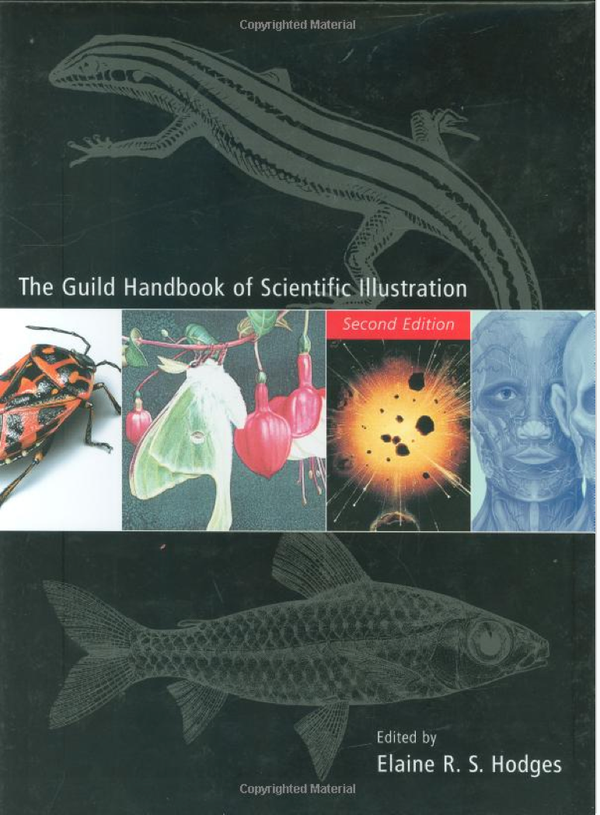
I joined the Guild of Natural Science Illustrators, attended their conferences, workshops, and ordered every book I could find on the subject. After the workshops, my favorite resource was the Guild Handbook of Scientific Illustration. It walked me through every aspect of creating accurate, detailed, stunning pieces and got me through the long intervals between the Guild's annual conferences when I had the chance to learn directly from the legends in the field.

If you have an interest in science illustration or are an illustrator who has used the GNSI's Handbook, take a moment to fill out this survey to help them assess how people with an interest in the topic use the book. Even if you haven't heard of it until now, but have an interest, hop over to the survey and let them know what intrigues you. The survey will remain open through October 19th. The book is available through the usual suspects as well as through the Guild directly.
Not included in the survey, but worth asking: Animated gifs: nifty or 'nnoying? Uhhh... I think I'm getting seasick...