This article was published in Scientific American’s former blog network and reflects the views of the author, not necessarily those of Scientific American
Throughout Sandy, I was cooped up in my apartment in northern Manhattan with my son Benjamin, who was studying for a medical school exam on the cranial nerves. I drilled him through endless lists, ocularmotor nerve (cranial III), hypoglossal (cranial XII), and so on.
Then he volunteered a medical factoid that I had never heard before, better than anything that had come through recently on the endless Twitter feeds. At one of his lectures last week, an anatomy professor mentioned that, if you pick at a pimple on your nose and it becomes infected, it can cause a brain infection, a bad one. Nothing more than a popped pimple can lead to meningitis. Here's the technical part: Afferents from cell bodies in the olfactory epithelium extend to exposed sections of the nasal mucosa (get your finger out of there). Those cell bodies in the olfactory epithelium also connect through the cribiform plate to the olfactory bulb, an open gateway to the central nervous system, including the meninges. A pathway from pimple to brain, in short. Yuck and re-yuck.
Anyway, maybe everyone knows that, not me. The mechanism for this was spelled out starkly in a 2010 mouse study that showed that Neisseria meningitidis infected through the nose caused a 20 percent fatality rate. Enough to put you on the path to acarophobia. That duct tape and plastic sheeting in my apartment is for creating a sterile anti-microbial bubble, not for catching shards of window glass. I need to keep my hands off myself.
On supporting science journalism
If you're enjoying this article, consider supporting our award-winning journalism by subscribing. By purchasing a subscription you are helping to ensure the future of impactful stories about the discoveries and ideas shaping our world today.
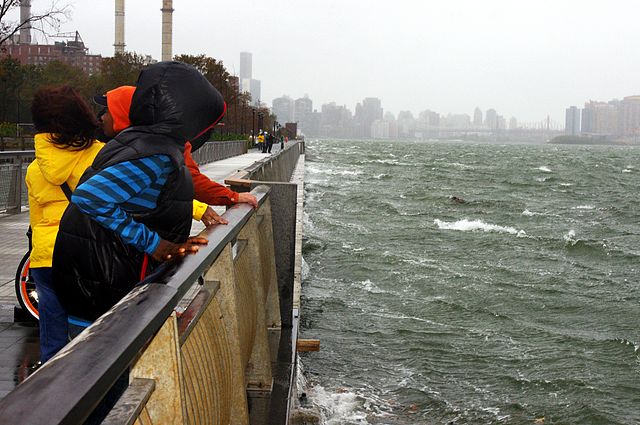
The arrival of Sandy in New York City brought about a lot of commentary on climate change and the possibility for an increase in the incidence of monster storms. All insightful. But it was also a general reminder of the inherent fragility of dense urban living. I remember from Monday night the video of the long line of ambulances snaking outside the NYU Medical Center, all engaged in the well-coordinated evacuation of some 200 patients after backup power had extinguished. An admirable and unpanicked response.
It brought to mind as well the possibility of another kind of event that I had wondered about throughout a lifetime as a city resident. If it had been a nuclear device, small or large and not just a post-tropical storm, there would have been no orderly lines. Hospitals in Manhattan would probably have ceased to function altogether. Survivors would be left to fend on their own and join the ghostly line of refugees streaming on bicycles, foot, scooters and in baby strollers over bridges and through tunnels. We desperately need to do something to stem climate change—and, with equal urgency, we should endorse proposals for zero nukes put forward by the likes of Sam Nunn, Henry Kissinger and crew.
Source: David Shankbone