
This article was published in Scientific American’s former blog network and reflects the views of the author, not necessarily those of Scientific American
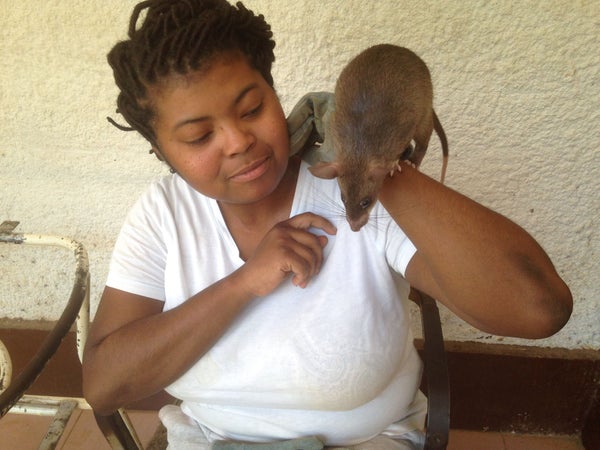
What's a day in the life like for you, a post-doctoral researcher who studies pouched rats?
I get this question often. The truth is it varies, depending on the time of year/semester and whether I am in the field or not. Whether in the field (#DispatchesDNLee) or here in the States (#DNLeeLab) are full days of research work - the thinking, tinkering, reading, writing, handling animals, running experiments, collecting data, taking measurements, training students, analyzing data, re-writing, cleaning up, setting up, etc...You get it. I hope you do.

On supporting science journalism
If you're enjoying this article, consider supporting our award-winning journalism by subscribing. By purchasing a subscription you are helping to ensure the future of impactful stories about the discoveries and ideas shaping our world today.
And alternating these tasks in a given day is exhausting.
My day: Early AM - animal facility, collect samples
Late am - office: stats, writing, meeting
afternoon more animals
Evening more desk work
— DNLee (@DNLee5) April 19, 2016
Right now, (here in the States) all my research work is done at my home institution, Cornell University. (Previously, I was at Oklahoma State University). I'm in a #DNLeeLab cycle and I'm in the middle of several activities at this very moment:
1) an observation study of female pouched rats to describe their reproductive biology. This requires daily observations and collections of physiological data. Sometimes I have to do #ratwrangling a couple of times a day.
2) Desperately trying to get manuscripts out. My field research and behavior experiments, from my time at Oklahoma State and Tanzania are being scored and analyzed (thank God for my Rock Steady Crew - my undergraduate assistants who help with experiments and video scoring).
a) field study and natural history survey
b) individual behavior variation
c) social behavior and interactions
This is cyclone of #datawrangling, #madreading, and #madwriting swirling in my mind and on my desk.

#madwriting

#datawrangling
My life is pretty cray-cray right now. Your girl would appreciate good vibes, prayers, and/or chocolate, flowers. Or better yet, send help. Asante sana.
