
September 12, 2012
Cameras to Focus on Dark Energy
A pair of detectors that measure minute distortions in images of distant galaxies will probe the riddle of cosmic acceleration
Cameras to Focus on Dark Energy
A pair of detectors that measure minute distortions in images of distant galaxies will probe the riddle of cosmic acceleration
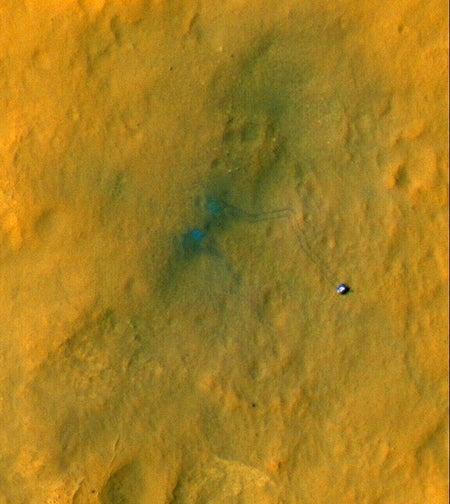
Mars Orbiter Captures Curiosity's Progress
NASA's Curiosity has completed its longest trek yet. The Mars rover journeyed more than 30 meters on its 29th Martian day, which ended September 5 at 2:37 A.M.

You Are Here: How Astronomical Surveys Are Pinpointing Our Place in the Cosmos
Upcoming telescope projects on Earth and in space will map out billions of stars and galaxies all around us
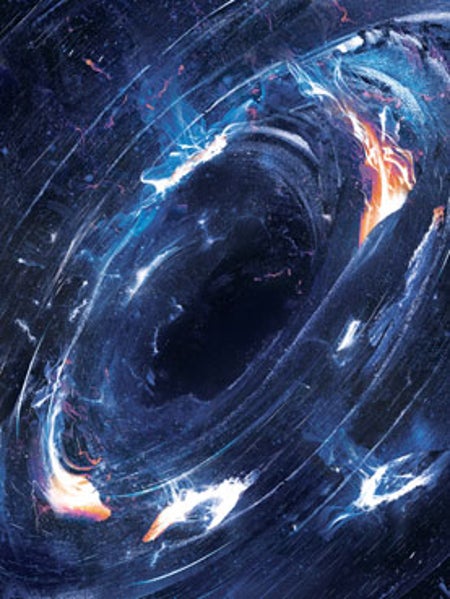
How Black Holes Shape the Galaxies, Stars and Planets around Them
The matter-eating beast at the center of the Milky Way may actually account for Earth's existence and habitability
Running Lights: Did Expelled Stars Re-Ionize the Ancient Universe?
Hot stars booted out of their galactic homes may be responsible for creating the conditions that led to today's universe
How Hot Is the Hottest Star? [Excerpt]
In a new book, astronomer Bryan Gaensler explores the extremes of the universe
Primordial Pinwheel: Astronomers Spot Oldest Prominent Spiral Galaxy Yet
Three billion years after the big bang most galaxies were clumpy and odd-shaped, but at least one had already assumed a familiar form, and may elucidate how modern galaxies got their shapes
Partners Line Up to Join the Large Synoptic Survey Telescope
The past few years have not been the best of times for building observatories. But in a world of budget constraints and schedule delays, the LSST is bucking the trend
Chat at 4:30 P.M. EDT on What Comes Next in Higgs Research
Join us for a live online chat about last week's Higgs news with physicist Michael Tuts of Columbia University. Tuts will help explain where physicists go from here
From Space to Soil in 7 Minutes [Slide Show]
Gravitionally Lensed Light Caused by Ancient Massive Galaxy Cluster
Astronomers observed light warped by the lensing effect of a massive galaxy cluster more than 10 billion light-years away, the most distant cluster ever responsible for perceived lensing. Evelyn Lamb reports
Higgs Boson Revealed at CERN [Video]
Go behind the scenes at CERN for the historic July 4 announcement