
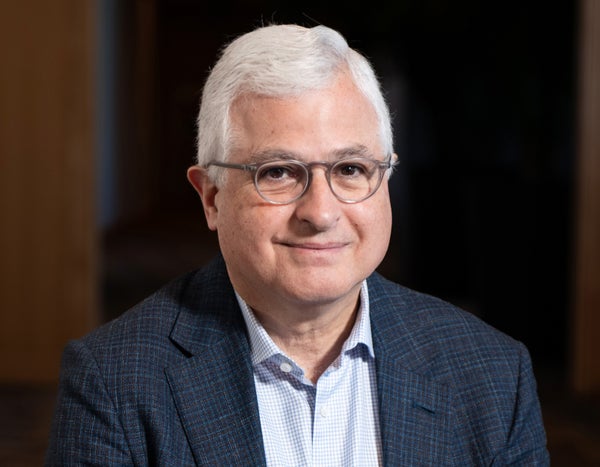

From the start of his M.D.-Ph.D. training, Fady Malik saw himself creating new medicines for patients. Still, helping launch a biotech company was not part of his plan. But in 1998, as he was completing his training as a cardiologist, he joined Cytokinetics, a young biotech company that was developing drugs that target the cell’s internal scaffolding, or cytoskeleton. “You have to be prepared for the unexpected and take advantage of those opportunities,” Malik says. Scientific American Custom Media spoke with Malik, who still runs Cytokinetics’ R&D program and is still seizing opportunities to develop new medicines that target the cytoskeleton and alter muscle biology.
You treated patients for more than 20 years alongside your work at Cytokinetics. How has your clinical work shaped your view of patient needs?
While interventional cardiology wasn’t directly aligned with drug discovery, interacting with patients every week and seeing their journeys and problems was instructive. For instance, you see that many people with heart disease are frail, and you recognize how important skeletal muscle function is to health and well-being. That provided lifelong inspiration for our research and development.
What are the outstanding medical needs for treating muscle diseases?
In cardiac muscle, there are diseases where the heart is weak and needs improved contractility. We first developed myosin activators to activate the motor that powers contraction and improve function. That’s a major problem affecting millions. On the other hand, some patients have too much cardiac contractility. For them, we developed inhibitors of cardiac myosin for hypertrophic cardiomyopathy. Skeletal muscle presents a different challenge: a wide variety of diseases, from inherited conditions to age-related loss of strength or illness and trauma. There’s a huge, underappreciated opportunity to develop medicines that address skeletal muscle dysfunction.
How is the research at Cytokinetics helping to meet those needs?
We’ve focused on paradigm-changing medicines that offer new ways of treating disease. In hypertrophic cardiomyopathy, work we began nearly 20 years ago on myosin modulation opened an entirely new field. There are now approved medicines and an ecosystem of biotech companies pursuing novel therapies. A small discovery or innovation can become a medicine that patients take for decades.
What is becoming possible in treating skeletal and cardiac muscle disease?
Advances in medicine have reduced the risk of heart attack dramatically and turned heart failure into a manageable condition. Now our understanding of disease is growing exponentially as we harness genetics and large datasets. At the same time, technologies to modulate biology are changing with RNA therapies, gene therapies and antibodies. We’ve pursued small-molecule drugs, but even there, activating a protein was novel when we began. Innovation constantly expands what’s possible.
What needs to happen to realize that potential?
Persistence. Developing medicines is one of the toughest pursuits. The rewards for patients are enormous, but progress requires working hard, thinking hard, and finding new ways to address old problems, or new problems with old ways. You have to be an optimist in drug discovery because the statistics aren’t in your favor.
What inspires you today?
Seeing patients whose lives have been impacted by our science and our new medicine, now approved in the U.S., Europe and China, is deeply reaffirming. All the years of work translating into tangible patient benefit, and a growing community committed to delivering therapies, is what inspires me. Once you’ve seen that impact, you hope to replicate it. Success, hard as it is, drives you to pursue it again.
Learn more here about Cytokinetics’ efforts to modulate muscle biology and treat muscle disease.