Journey through the History of Alzheimer’s Disease
A century after its discovery, scientists are beginning to grasp the complex biology of Alzheimer’s. Now the race is on to develop new tests and treatments
Joelle Bolt
This article was produced in partnership with the Davos Alzheimer’s Collaborative by Scientific American Custom Media, a division separate from the magazine’s board of editors.
Join Our Community of Science Lovers!
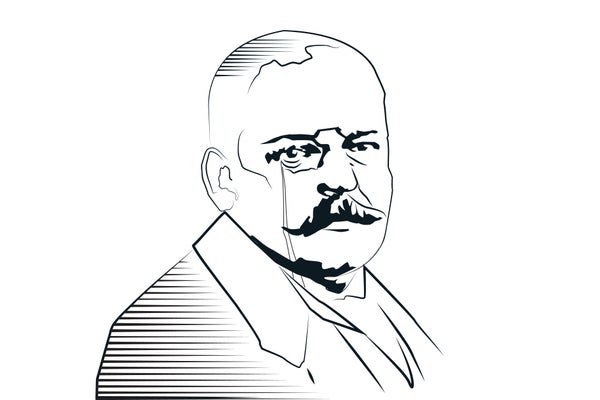
Dementia has been around since antiquity, but scientists identified Alzheimer’s as a brain disease only a century ago. Clues to its biology emerged slowly, and the field struggled. But discoveries accelerated since the 1990s, through advances in numerous fields, including genomics, brain imaging and immunotherapies. Today, as scientists chase new diagnostics and therapies, the stakes remain high.
Joelle Bolt; Sources: Phyllis Barkman Ferrell; “Milestones” by the Alzheimer’s Association; Tangle visualization: P. Liu et al., Signal Transduction and Targeted Therapy 4, 29 (2019); Robert Katzman: S. Pincock, The Lancet 372, 1804 (2008); First clinical rating scale: S. Tomaszewski Farias, Neuropsychology 22, 531 (2008).
This article is part of The New Age of Alzheimer’s, a special report on the advances fueling hope for ending this devastating disease.
Learn more here about the innovation ecosystem that Davos Alzheimer’s Collaborative is building to speed breakthroughs and end Alzheimer’s disease. Explore the transforming landscape of Alzheimer’s in this special report.
Subscribe to Support Independent Journalism
Great science journalism requires human expertise, time, effort and creativity. And it costs money. That’s why I and the journalists here at Scientific American hope you’ll join our community.
When you subscribe, you are supporting staff and freelance journalists who are passionate about telling science stories that are true, important and compelling. Our editors and reporters are often experts in their fields, which means they understand the nuances of big discoveries and can untangle the breakthroughs from the hype. With a subscription, you are also supporting rigorous fact-checking to ensure the words we publish are precise and accurate. And you’re supporting original illustrations, graphics and photos that bring you closer to an advanced laboratory, an ice sheet in Antarctica or a space mission in orbit. You’re helping us craft other types of high-quality journalism as well: Our newsletters are carefully written, edited and curated by staffers you have or will come to know and love. Our Science Quickly podcast is based on original reporting, collaboration with editors and scientists and exacting production.
Subscriptions keep this engine running so we can continue to deliver thoughtful, rigorous and independent science journalism to you. In an era of viral misinformation, this work is crucial. If you value what we do, I hope you’ll consider joining us as a subscriber
Thank you,
Jeanna Bryner, Editor in Chief, Scientific American