
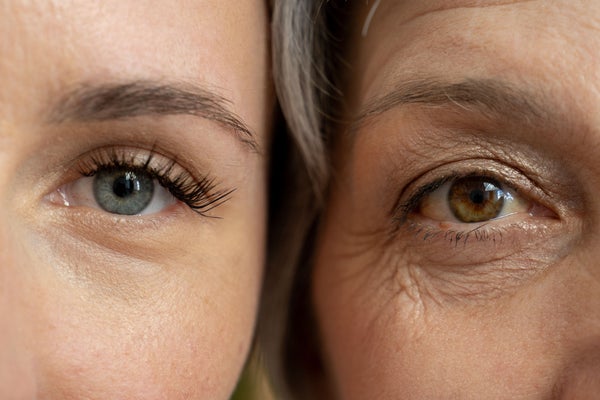


Age paints a familiar picture in the mind—gray hair, sagging skin, perhaps some darker spots on the face or hands. That image is frequently associated with functional decline, from impaired vision to lack of energy and memory loss. But is there a link between looking healthy and actually being healthier in old age?
“If people feel good about themselves, they're more likely to take care of themselves,” says Laura Carstensen, a psychologist at Stanford University who founded the Stanford Center on Longevity.
Feeling better about aging might lead to better goal-setting, suggests Carstensen, an advisor to Estée Lauder on its longevity research. “If we're asking people to exercise, save money, deny themselves some pleasures in the moment so they can do better in the future, we really need appealing images of what our future selves will be like.”
Aesthetic considerations, in other words, may be more than skin-deep—healthier and younger-looking skin could reinforce a virtuous cycle that has broad benefits for physical and psychological wellbeing.
Turning back the cellular clock
As people live longer and healthier lives, it’s important that they have tools to address signs of aging in skin, encouraging a positive self-image and tapping into that beneficial cycle.
Younger, healthier-looking skin is a lofty goal, and a class of signaling proteins called sirtuins may help reach it. They’ve been a target of research into age-related areas, such as heart health, since the 1990s, when biologist Leonard Guarente, of the Massachusetts Institute of Technology, started studying how they affect aging in yeast. Sirtuins are present in the cells of species from plants to octopuses to humans, and have been found to regulate cell metabolism, which affects how cells function, age and respond to stress.
Inspired by this research, for more than 15 years scientists at Estée Lauder have been studying the role of sirtuins in skin longevity. In particular, they’re interested in whether stimulating these natural proteins leads skin cells to behave as they did when they were younger.
“We’re not just talking about anti-aging anymore,” says Nadine Pernodet, who leads Estée Lauder’s Global Biosciences Group.
As we age, the level of sirtuins in skin cells decreases because of oxidative damage caused by exposure to ultraviolet light and pollution, as well as lifestyle factors such as stress and diet. Oxidative damage is closely associated with the buildup of unstable molecules called free radicals, which can permanently harm cells. Estée Lauder’s researchers have found that it is possible to increase sirtuin activity to help skin cells bounce back to a younger state, combating skin aging.
“By understanding these critical mechanisms, we gain insights about skin aging and there is hope that you can have skin that looks much younger than its chronological age,” Pernodet says. “This is what your skin used to do, but has forgotten over time. We just remind skin to continue to work.”
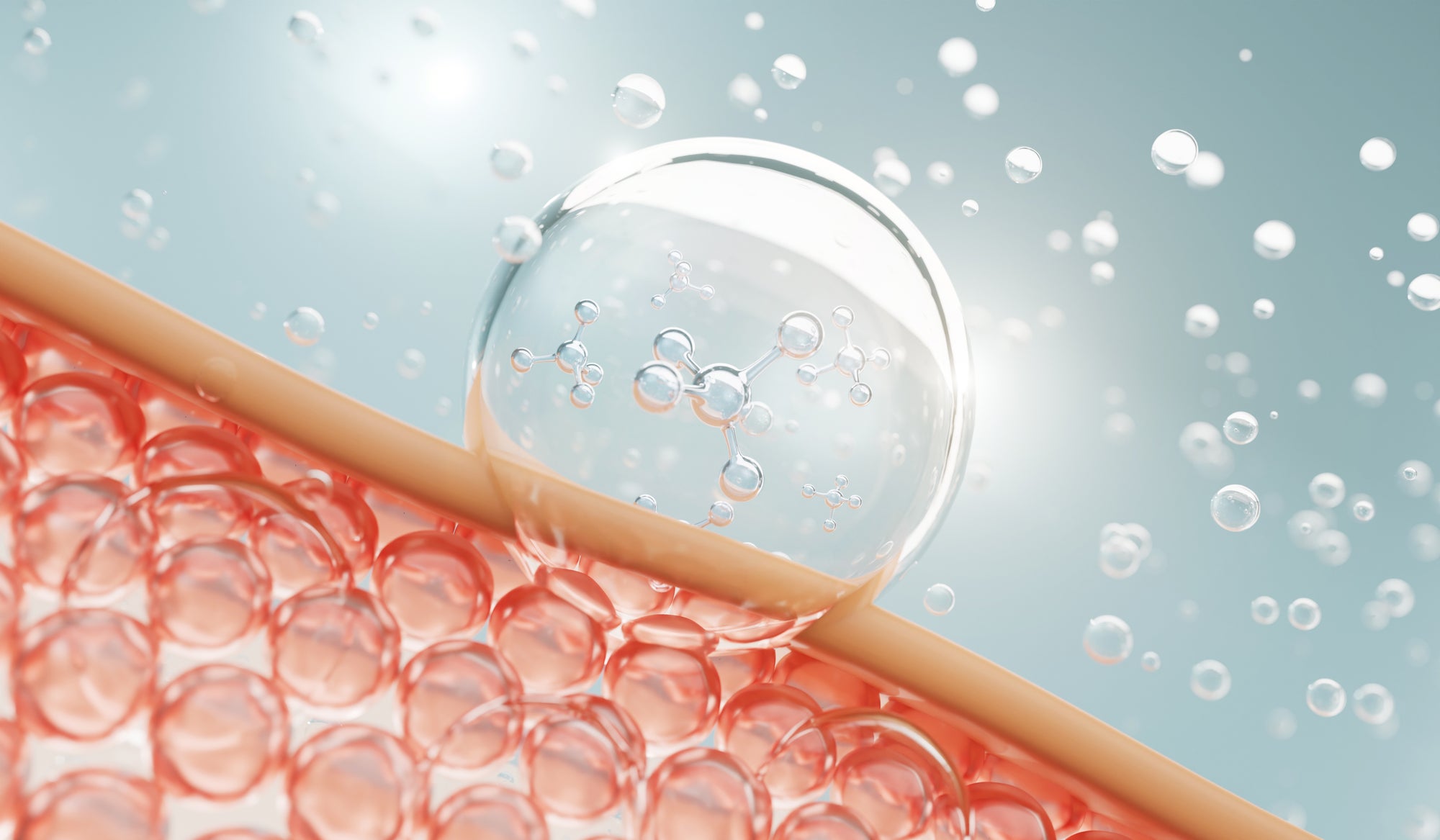
Among other benefits, sirtuin activation can stimulate the production of collagen and elastin, which support skin layers.
Dark Gel/Shutterstock
The science of sirtuins
Of the seven known sirtuins, Estée Lauder’s researchers have studied the roles of four in skin aging. Sirtuin activation can promote skin cell differentiation, help skin cells resist environmental stress, repair damage, and build up substances such as collagen and elastin, which support skin layers. Using skin biopsies, Estée Lauder’s researchers have altered the activity of key sirtuins to gauge skin cells’ reaction. “As we understand more about each sirtuin, there’s an opportunity to reactivate them, bringing the level close to what you have in young skin,” Pernodet says.
They found that increasing Sirt1 levels promotes the formation of fibrillin—elastic fibers that anchor the skin’s outer epidermal layer to the dermal layer underneath. The loss of fibrillin with age is part of the reason that skin sags. When researchers treated skin for 11 days with a Sirt1 activator, Pernodet says, the fibrillin network was reinforced.
Estée Lauder has also studied Sirt3, found in the mitochondria that produce chemical energy for cells. As mitochondria age, they start to produce more free radicals, accelerating the aging process. The researchers applied a Sirt3 activator to a skin sample from a 62-year-old and found that levels of an energy-carrying molecule increased to match the levels in a skin sample from a 19-year-old, Pernodet says, adding that the same Sirt3 activator has been shown to boost skin’s natural elastin production.
Another important finding was that Sirt6 appears to help maintain the length of telomeres, which are found at the ends of chromosomes and act like a protective cap. Each time a cell divides, its telomeres get shorter. “The telomere is critical for cells’ lifespan, but more importantly for their health span,” the length of time that a person remains active and well, Pernodet says. “That’s because once the telomere is used up, these cells are not dead.” Instead, they start spewing out substances that degrade the collagen and elastin that help maintain the shape of skin. “The cells are still alive but making your skin less healthy.” Estée Lauder research showed that a few weeks of treatment with a Sirt6 activator slowed the degradation of telomeres and significantly increased the healthy lifetime of skin cells, Pernodet says.
Healthier skin, happier within
Pernodet hopes her team’s findings can be leveraged to develop breakthrough technologies that can help delay and even reverse the visible skin damage that comes with aging, bringing the prospect of “regaining denser, firmer skin with fewer lines and wrinkles, and skin tone that looks more even with fewer age spots.”
Advances in medical science have dramatically increased the human lifespan. While work to treat the diseases that come with old age continues, researchers are also turning their attention to health span: the length of time that a person remains active and well. When people feel and look better, Carstensen says, it can encourage them to plan for a healthier and happier future.
“To help people feel good about themselves, how they look, what their skin is like, could be an incredibly positive contribution for public health,” she says. “What we can do now is rethink how we live our lives, so that longer lives are higher-quality lives,” she says. “Not just in old age, but in every stage of life.”