



When we age, our scrapes don’t heal as quickly, our movements elicit grunts, our twinges persist longer than they used to. Larger shifts can also degrade our ability to go about our daily lives, setting off a spiral of diminishing health. By understanding these changes, researchers hope to be able to keep people healthy, active and productive throughout their lives. Here’s what tends to happen to our bodies as old age approaches:
SKIN loses the proteins elastin and collagen, which makes it less elastic, and it loses fat cells, which makes it thinner, more transparent, drier and more prone to bruising. When it folds, it tends to stay creased—that is, wrinkled. It also becomes less sensitive to touch.
DIGESTION slows, which can make people more prone to constipation, gas and reflux. The risk for colon cancer, ulcers and lactose intolerance rises. In general, however, the digestive tract is one of the body’s most stable systems.

Myriam Wares
The BRAIN AND NERVOUS SYSTEM degrade significantly. Nerves transmit signals more slowly and can be impeded and pinched by hardening cartilage in the spine and joints. Reflexes slow down and short-term memory, verbal recall and processing speed diminish.
EYES lose sensitivity. The pupil is slower to adapt to changing brightness, and the retina does not detect low levels of light as efficiently. The lenses grow stiffer and work harder to bring close objects into focus. Fewer nerves transmit data to the brain, so depth perception diminishes.
REPRODUCTIVE SYSTEMS age differently for men and women. Women experience the seismic shift of menopause, in which estrogen and other hormones drop to pre-menarche levels in a few years, lowering libido and making the vagina drier. In men, by contrast, testosterone levels drop gradually, affecting libido and virility.
The IMMUNE SYSTEM quickly loses its ability to generate new T cells, important for fighting infection, in the first decades of life. After that, the body’s 450 lymph nodes work to keep existing T cells healthy but lose effectiveness late in life. White blood cells and macrophages also weaken and slow.

Myriam Wares
HEARING degrades with exposure to loud noises, which can build into significant hearing loss. The loss is usually most pronounced with high pitches, which affects the ability to hear consonant sounds.
The RESPIRATORY SYSTEM holds up relatively well. But, the diaphragm can weaken, making breathing more difficult, especially during exercise. The lungs also become less sensitive, allowing foreign particles to build up before nerves trigger a cough to expel them.
URINARY problems arise as the kidneys and bladder age. Kidneys lose some of their nephrons, which filter wastes from the body. Bladders become less elastic, so they hold less urine and don’t empty as completely. And weakening muscles around the urethra allow both more infections and more leakage.
Myriam Wares
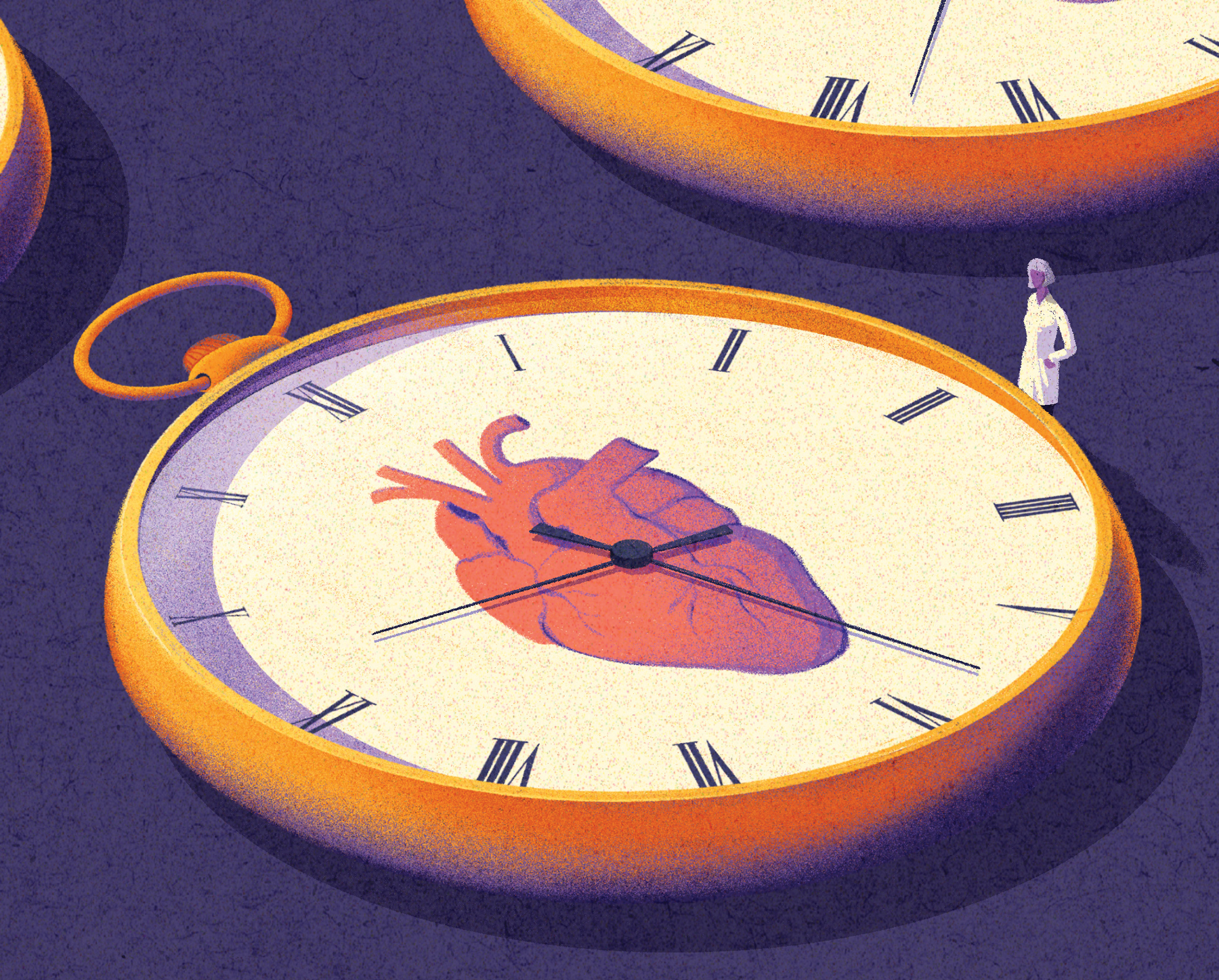
CIRCULATORY SYSTEM failures include heart disease, beat irregularities and artery-wall thickening, which lead to increased risk of aneurysms, clots and problems with circulation and blood pressure issues. Cardiovascular diseases are the leading cause of death.
BONES become less dense and more brittle, and diminished cartilage in the joints reduces their ability to absorb impacts. Osteoarthritis, a decrease in bone density that affects half the world’s seniors, makes daily tasks more difficult and painful.
TASTE AND SMELL diminish somewhat after about age 60. Taste buds decrease in number and become physically smaller. (Sweet and salt flavors degrade more than bitter and sour.) Smell can disappear in the early stages of neurological disorders such as Parkinson’s and Alzheimer’s.
Explore the emerging science of healthspan in other stories in this special report.