


Anyone who’s ever tucked in to a plate of extra-spicy chicken wings is familiar with capsaicin, the fiery chemical that lets chili peppers bring the heat. But how exactly does capsaicin elicit that burning sensation? That’s something that David Julius of the University of California, San Francisco, pondered long and hard, even at the supermarket.
“I was in the aisle where all these spices are lined up, all these different types of chili extracts,” recalls Julius. “And my wife, who’s also a scientist, finds me just standing there, staring. She says, ‘What are you doing?’ And I say, ‘This damn receptor, it’s got to exist!’ And she says, ‘Why don’t you just focus on it and get it done?’
That shot of straight talk spurred the discovery of TRPV1, the cellular receptor that recognizes capsaicin—and the first that senses temperature, as well. It also led to a series of findings that uncovered the molecular roots of pain.
These findings earned Julius the 2020 Kavli Prize in neuroscience, which he shared with Ardem Patapoutian of the Scripps Research Institute, who uncovered the receptors we use to sense pressure.
“For decades, biologists have known how chemical signals are transmitted—including our senses of smell and taste,” Patapoutian says. “But we knew much less about how we sense physical forces, including temperature and pressure—which define our sense of touch.”
“When you touch a hot stove, something must be detecting temperature,” Julius says. “But was there a discrete molecule that does that?” Since spicy food is hot, it stood to reason that it might be the capsaicin receptor. And when Julius’ team poured increasingly warmer solutions over pain-sensing neurons, “lo and behold, the capsaicin receptor was activated.”
Then his lab and Patapoutian’s, working independently, discovered a receptor that responds to menthol and cold temperatures. And they realized that when these receptors are activated, they all act as channels that allow calcium to flood into sensory neurons and trigger neural impulses. “That was an amazing, eureka moment,” Julius says. It also led to the discovery of an entire family of channels that detect chemicals that the body produces in response to injury, inflammation, or disease.
Here, Julius describes the next big questions for pain researchers: how these channels shape-shift in response to heat or cold, how new pain-killing drugs could target them, and how better understanding of pain pathways could lead to precision diagnosis and treatment for specific types of pain.

2020 Kavli Prize laureates David Julius (left) and Ardem Patapoutian
How can a protein receptor help us sense heat?
That’s a very important question. We have a pretty good idea of how capsaicin works. We know where it binds and we have some idea of how that induces conformational movements in the channel to open it up. But for heat, we don’t know. We think that by using cryo-electron microscopy, which allows you to capture proteins at different stages in their life cycle better than X-ray crystallography, we might be able to see temperature-dependent changes in the structure of the channel as it opens. Are specific regions of the channel more temperature sensitive than others, or is the response integrated over the whole protein? And how does that play into its role in pain sensation physiologically? These are things that we definitely want to understand.
Can we develop a painkiller that eases pain, but does not disrupt our ability to sense heat?
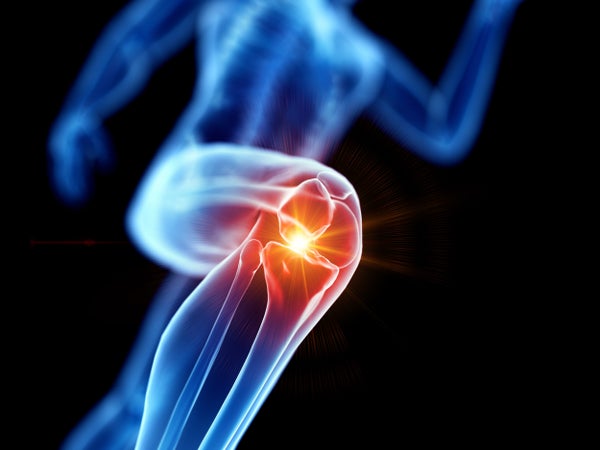
The challenge is to develop an analgesic that can diminish hypersensitivity to pain without losing this protective function. Some early TRPV1 antagonists scored well in models of osteoarthritic knee pain, but they also blocked the channel’s ability to detect heat, so drug companies worried about people drinking hot coffee and burning themselves. There are new drugs that have less of the side effect of diminishing heat sensation. Maybe, if someone has osteoarthritic knee pain and they can't even walk, you could counsel them and offer some education and say, "Look, this drug will really help you, but you have to be careful when you encounter things that are hot." Perhaps we can allow patients to make the decision about whether it’s worth the trade-off.

Illustration by Falconieri Visuals
Will there ever be a single pill that can cure all pain?
There won’t be a magic bullet for all types of pain. Acute and chronic pain are distinct processes—and there are multiple types of chronic pain. Migraines differ from bladder pain, which differs from cutaneous pain. And, tissues sense different types of pain using different subsets of sensory neurons and different molecules. But if you can develop a drug that’s really great for dealing with one type of pain—say, a persistent itch due to one type of clinical syndrome—that would be a major development for many patients. I think we have to give chemists a chance to make the right compounds, and then test these drugs in clinical trials to see where they’ll be most effective.
Can we develop better methods to measure and treat long-term chronic pain?
When people come into the clinic, say they're in pain but don't have a physical manifestation of an injury, they're up against a hard place. Pain has a very subjective component to it, and a lot of times people will say, “It's all in your head.“ Having more objective measures would enable them to be more accurately assessed as patients. These people need help. We’re just beginning to understand how different sensory neurons talk to the nervous system, including the circuitry and the molecular players that regulate these circuits. That will be critically important for understanding how neurons in the central nervous system end up hypersensitized in persistent pain syndromes. For long-term pain management, we really need to come up with alternatives to opiates, as the whole opioid epidemic has clearly brought home. There’s been a lot of progress in the pain field over the last 20 years. I think we need to keep going on this path, identifying and understanding mechanisms, then targeting them and staying with it. Like I always tell people in my lab, persistence pays off.
To learn more about brilliant work of Kavli Prize Laureates, visit The Kavli Prize. To explore more of the biggest questions in science, click here.