



Each winter, worried parents have flooded health care providers’ offices with sick babies, hoping for treatment that could help their infant recover from this “stubborn cold.” Many parents don’t realize that their child’s symptoms may not be just a common cold, but respiratory syncytial virus (RSV)—a leading cause of infant hospitalizations and an important public health focus for Sanofi and AstraZeneca, who have partnered on RSV prevention research since 2017.
Because there is no specific treatment for RSV, millions of parents would endure anxious days trying to clear mucus and ensure their baby stays hydrated and fed—while some face the distress of seeing their infant hospitalized.
However, in 2023, RSV maternal and infant immunizations first became available to help protect the broad infant population, offering the potential to reduce this significant, annual burden on the infant population, families, and the healthcare system. The public health impact of these new prevention strategies has become evident immediately, in particular where immunization programs target the broad infant population. As shown by real world studies around the world, hospitalizations of infants with severe lung infections from RSV have been reduced by 50 and even 90 percent, compared to previous years without prevention programs for RSV disease.
An annual epidemic: RSV disease in infants
RSV is a seasonal disease that surges in the winter months and is a leading cause of infant hospitalizations worldwide. In the US, RSV has been the most likely reason an infant is admitted to a hospital in their first year.1 While many infants only develop mild cold-like symptoms, in some cases RSV can progress to more serious lower respiratory tract infections, such as bronchiolitis and pneumonia. RSV is the leading cause of lung infections in all infants, whether they’re born during the RSV season or before.
One out of every 50 babies will be treated in a hospital due to RSV disease1, and it’s impossible to predict which infants will develop severe disease. Most infants hospitalized with RSV were born healthy and at full term, showing how all infants are at risk from RSV disease. Infants are especially vulnerable for two reasons; first, their immune system is still developing and thus unable to generate protective immunity. Second, their small lung architecture also means mucus and inflammation in the lungs can lead to difficulty breathing.
Of course, infants are not the only ones affected when they get sick. In a survey of parents whose infants were hospitalized with RSV, they reported high levels of stress and anxiety, disruptions to family routines, challenges balancing work responsibilities, and a drastic decline in overall health-related quality of life. Parents and caregivers missed an average of 29 hours from work, and many of them felt guilty about being away from other family members.2
Within the family, older siblings might also be sick. RSV is highly contagious, and toddlers and young children are often the first to get sick and transmit the virus.3 Grandparents, who are also at high risk from serious RSV disease, might need to avoid visits.
In the past, the influx of RSV cases during the annual winter surge has been overwhelming for clinicians. Pediatricians need to manage a full sick waiting room while also seeing their regularly scheduled patients. Hospitals often need to add staffing and intensive care beds to manage the surge of cases.
RSV puts a significant disease and emotional burden on society each year. Additionally, one recent study estimates that over $1.5 billion has been spent annually in the US treating RSV among infants less than 12 months,4 demonstrating how prevention of RSV disease in infants could save resources, as well as reduce stress for families.
A challenging history: RSV Retrospective
Since the virus was first identified in the 1950s, its dramatic impact on health and well-being quickly became apparent. Six decades of work has gone into finding ways to effectively prevent babies from developing lung infections from RSV.
Only a little over a decade ago, a breakthrough enabled the development of targeted immunization strategies through the understanding of how the virus surface protein allows entry into cells. As a result of this renewed research, in 2023, prevention of RSV lower respiratory tract disease became possible for otherwise healthy infants for the first time. After years of development, two different strategies for protecting the broad infant population were implemented: direct immunization of infants with a long-acting monoclonal antibody and vaccination in pregnancy.
Promising developments: Innovations in RSV Prevention
Both direct immunization and maternal immunization strategies provide passive immunity to infants, giving them antibodies to help fight the infection from spreading to their lungs. Vaccination in pregnancy uses the fully developed adult immune system to generate antibodies, which are then transferred across the placenta to the baby, especially during the third trimester of pregnancy. Similar to prevention strategies for pertussis and influenza, these antibodies are able to help protect infants from severe disease for their first months.
Direct immunization with a long-acting antibody also avoids reliance on the infant immune system. In this case, the antibody is given as an injection and timed to offer protection to coincide with the RSV season when the virus is circulating.
These antibodies help protect infants from developing RSV lung disease, while still allowing the developing infant immune system to develop natural immunity to RSV. Technological advances also enabled monoclonal antibodies to be made to be long-acting, so they circulate in the body longer than a typical antibody does. With these innovations, a single dose of antibody can offer protection to an infant for the full RSV season.
A new path of prevention: Uptake and Acceptance
The implementation of these new immunization programs began in the EU and US in the fall of 2023-24. The previous season had been a severe one, and increased news coverage had taught the public what pediatric providers have long known: RSV is the leading cause of lower respiratory tract infections in infants and young children.5 With increased awareness among parents about RSV and with the support of immunization managers and pediatric physicians, uptake of RSV immunizations to help protect infants has been unprecedented.6
National and international guidance helps support successful implementation.7 Importantly, successful programs, such as the one in Galicia, Spain, have included education for parents and health care providers. Having upfront information allows parents and parents-to-be to have time to learn about RSV and become familiar with RSV prevention strategies before the immunization is offered, helping ensure they are confident with their decision.
In Spain, more than 90 percent of eligible infants were immunized in the first season of availability. In the US, more than half of eligible infants received protection in the 2023-24 season and uptake increased during the 2024-25 season. The positive impact of RSV prevention became apparent quickly.
Demonstrating the impact: RSV prevention in the real world
The implementation of these new prevention strategies offers an opportunity to assess their impact on public health and the benefits they bring – in this case for infants, who represent one of the most vulnerable groups. One example is Galicia, Spain. Here, 92 percent of infants entering their first RSV season received direct immunization in the 2023-24 season.
After the implementation of RSV prevention in Galicia in the 2023-24 season, RSV-related hospitalizations among infants were 89 percent lower compared to previous years before RSV immunization (Figure 1), according to a study sponsored by Sanofi and AstraZeneca.8 Coverage remained high in Galicia in the 2024-25 season, and hospitalizations remained similarly low.9
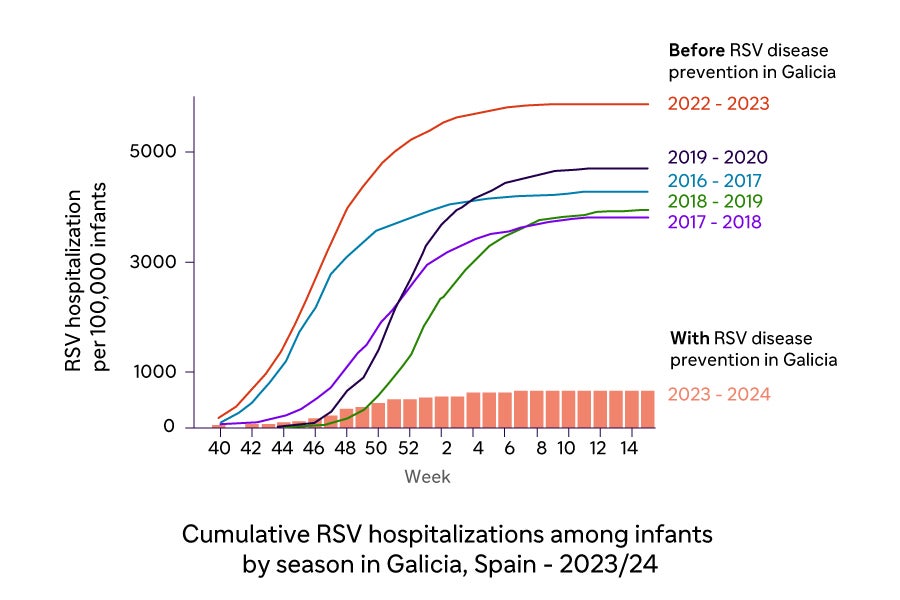
Figure 1. Cumulative RSV hospitalizations among infants by season in Galicia, Spain
These results were among the first to demonstrate that RSV disease prevention can be effective for the broad infant population. Soon after, more and more evidence confirmed this pivotal moment for the health and well-being of our smallest children.
Direct immunization uptake in Chile was higher than 94 percent among eligible infants in the first season of use within the country. Most infants born during the RSV season received the monoclonal immunization within one day of birth, showing the success of their implementation program.
Protection from RSV disease in Chile is estimated to have prevented over 3500 RSV-related hospitalizations among infants, a reduction of 73-83 percent compared to past years.10 Even more notable, no babies eligible for RSV immunization died due to RSV in Chile in the 2024 season, compared with 13 infant deaths in 2023.
Among countries with infant RSV prevention strategies, this reduction of hospitalizations reduced hospital bed use and helped alleviate the significant stress on the healthcare systems that typically occurs every winter. Through these direct and indirect benefits, the burden RSV has placed on the healthcare system year after year has now become apparent.
Vaccination in pregnancy is another example of RSV prevention for infants, and Argentina provides us with an example. A recent conference presentation showed that with uptake of 62 percent among eligible pregnant persons expected to give birth during the RSV season, RSV hospitalizations among infants three months and younger were 40% lower compared to the previous year.11
In the US, the Centers for Disease Control recently reported the impact of RSV prevention for the 2024-25 season, with both strategies available.12 With more than half of babies receiving protection through either direct immunization or vaccination in pregnancy, RSV hospitalizations were 31 percent lower among infants 0-7 months compared to past years, based on data from the New Vaccine Surveillance Network. In contrast, among other young children, RSV hospitalization rates were as high or higher than previous years (Figure 2).
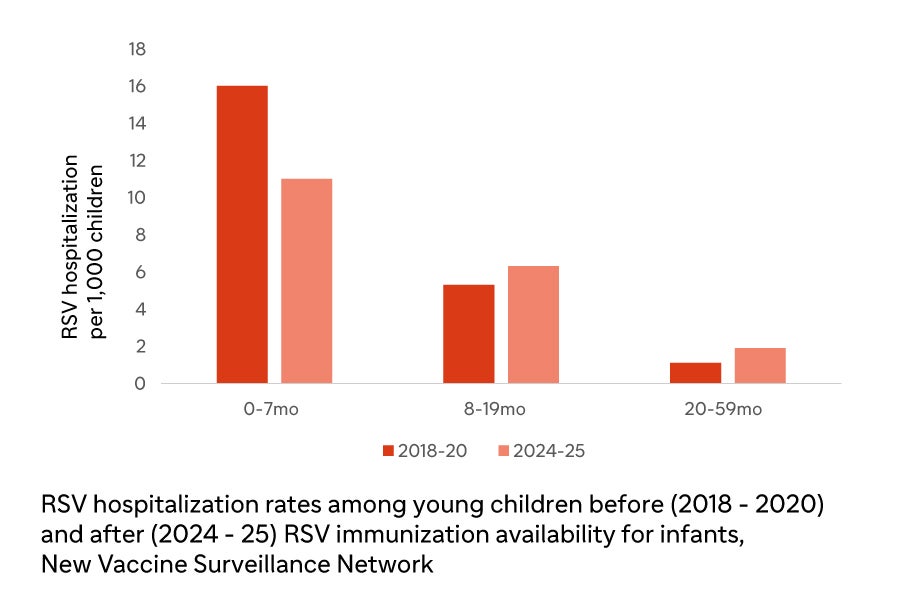
Figure 2. RSV hospitalization rates among young children by age group before (2018-2020) and after (2024-25) RSV immunization availability for infants in the US, New Vaccine Surveillance Network (CDC)
Looking to the Future: Optimizing RSV prevention
These examples highlight how timely uptake of effective prevention and offering protective immunizations to target the broad infant population reduce the disease burden of RSV. Overall, preventing RSV through passive protection had a beneficial impact on infant health, public health, healthcare system, families and providers. Passively protecting both infants born during the RSV season and infants born before the RSV season can help families and healthcare providers avoid the stress that has defined the RSV season for infants for decades.
Studies looking at effectiveness of these prevention strategies support the results from the clinical trials. While these options have only been available for a short time, the evidence has quickly accumulated, with results in the real world consistent across geographies, study designs, and seasons. As we look to the future, Sanofi and AstraZeneca remain committed to the goal of helping protect all infants against the seasonal impact of RSV.
The last two years give us a glimpse of what is possible and a promise of even more widespread successes in the future with expanded implementation of these new tools across the world. As our experience with these tools grows, we will gain a better understanding of how effective each of these individual products are, the types of programs that are most successful at decreasing risk to infants, and the kinds of educational programs that best inform parents about these prevention options.
After so many years of waiting for tools to help prevent RSV in infants, we are at an inflection point where this leading cause of hospitalization may become a thing of the past, similar to other childhood diseases that are no longer commonplace following immunization availability. To achieve the potential of infant RSV prevention, it will be critical to ensure options are offered for protection of the broad infant population.