
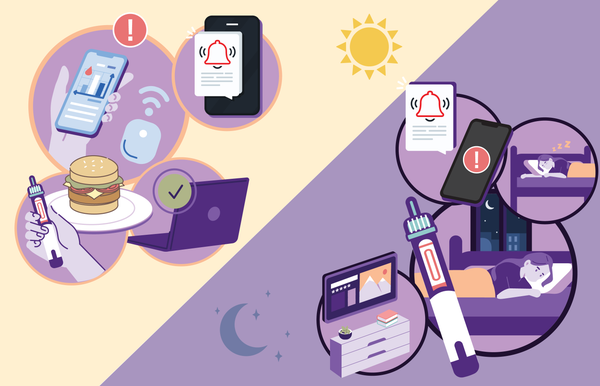

Despite their best efforts to manage the disease, many people living with T1D still struggle to meet their health goals. In a 2023 study, the American Diabetes Association’s recommended target of hemoglobin A1c (HbA1c) of less than 7% was achieved by just 25.2% of people with T1D. Each person’s experience with T1D is unique, making it difficult for most to maintain consistent glucose levels despite constant care and attention. The dynamic nature of insulin requirements across age, body-mass index (BMI) and delivery modalities—along with difficulty achieving glycemic targets despite advanced technologies—highlights the need for tailored approaches in tandem with technological support and meticulous care. Continued development on decision support tools is necessary to aid patients as well as providers in optimizing diabetes management, especially for those without automated insulin delivery systems. Improving accessibility for diabetes technology is also paramount to ensure all those affected by T1D have access to the same quality of care. Most people living with T1D are doing their best to manage the disease, but still struggle and worry.

Andrew holding his Boston Marathon completion medal.
Vertex Pharmaceuticals
The story of Andrew, who was diagnosed with diabetes at age 25, illustrates the practical and psychological strain that can accompany a diagnosis of T1D. The father of a young son, and a runner who completed the Boston Marathon in 2017, Andrew takes pride in his efforts to live an active lifestyle and maintain a healthy diet. Still, he has found that he can live the same day—eating the same foods, sleeping the same amount, doing all the same activities—and still have varying blood sugar levels with extreme highs.
While supported by his endocrinologist, he still struggles to meet HbA1c targets. Andrew frequently has issues with his blood sugar spiking, particularly after exercise. He played and coached soccer for most of his life, and his blood sugar levels would run high after spending a couple of hours on the field. He explained how he would stay up late on those nights hoping his blood sugar would go down, and ultimately, it would crash while he was asleep. In those moments, Andrew would wake up drenched in sweat and try his best to get downstairs quickly to grab a cola from the fridge—a task he normally can do in 30 seconds takes him about 15 minutes when his blood sugar is this low. He described the sensation like “having jelly legs” or “like trying to walk up and down stairs after running a marathon.”
Andrew’s life, like many with T1D, is filled with a sense of helplessness over his disease. His inability to control his symptoms, his blood sugar and his lifestyle is exhausting. Andrew shared, “I feel like I have to trick my body,” when describing the variability of the disease. He is devoted to carefully managing the symptoms of his T1D, seeing the best doctors and specialists multiple times a year and making healthy choices each day. This has left Andrew burned out, frustrated and longing for the sense of agency and stability of his life before he was diagnosed, and he has considered participating in clinical trials of new approaches. He said, “At best, I’d never have to deal with it again.”
Andrew believes speaking about his experience is the greatest therapy, and advocating for a better tomorrow for those living with T1D can only help.

Vertex Pharmaceuticals
TURNING TO A TRANSPLANT
For people with T1D with metabolic complications such as diabetic ketoacidosis (DKA) or severe hypoglycemia despite optimized glycemic management, pancreas or islet cell transplantation may be considered. Anne, diagnosed with T1D at age 6, lived with T1D for many years, constantly monitoring her symptoms and blood sugar levels. As a child, Anne’s parents had been informed that Anne wouldn’t live to 30, wouldn’t have kids, and that this diagnosis was basically a death sentence. During Anne’s childhood, living with T1D wasn’t really living at all. She recalled that her parents kept her in a bubble and the only way she knew her blood sugar level was if she went to the hospital. While there have been many advancements in diabetes care over Anne’s lifetime, they have fallen short of fundamentally changing the course of the disease.

Anne with her dog, Ziggy.
Vertex Pharmaceuticals
Throughout her life, Anne's blood sugar ran low often; she could lose control of her faculties, sometimes passing out. After getting into a severe car accident while pregnant with her eldest son, who also has T1D, Anne began working with advocacy organizations to understand what other options might be available that could end the cycle of fear, stress and complications that defined her life with T1D. She received a pancreas transplant in 2018, which enables her body to produce its own insulin without the need for diabetes medication. Given risks associated with organ transplantation (e.g., invasive procedure, immunosuppression), it is generally reserved for those with end-stage kidney disease or severe metabolic complications despite optimized glycemic management. Anne also must take immunosuppressive drugs for the rest of her life, which can come with its own challenges. However, she believes that the risks of immunosuppressants have been outweighed by the benefits she’s experienced.
Anne shared, “It’s shocking how much time I have in my head to think about other things for the first time in my life—time to read, travel, learn, study things—I just didn’t have the bandwidth to do any of that. When you have type 1 diabetes it is a 24-hour dialogue of stress; the stress your body takes on with this disease is immeasurable. Living this way compared to living with type 1—one is life-providing, and one is life-threatening.”
A MORE HOLISTIC APPROACH
Anne and Andrew’s experiences illustrate the wide-ranging impact that living with T1D can have—not just on physical health, but also on psychological and emotional well-being. By recognizing these complexities and focusing on patient-centric innovations, people living with T1D could create a future where their condition is no longer a 24-hour burden. For patients like Andrew, that future couldn’t come soon enough: “If we could figure out how to fix the problem rather than manage it, that would be beneficial for a lot of people.”
This article accompanies “Innovations In: Type 1 Diabetes” an editorially independent special report that was produced with financial support from Vertex.