
EvolutionJune 12, 2014
Arctic Fox Origins Traced to Tibet
High terrains might have been the training ground for cold adaptation before the Ice Age struck
Arctic Fox Origins Traced to Tibet
High terrains might have been the training ground for cold adaptation before the Ice Age struck
Monkeys Show Gender is Not a Fixed Variable in Childhood Behavior
Some say that the differences between boys and girls are just aping nature, but studies of primates tell a more complex story "Boys will be boys" is a popular refrain in schools.

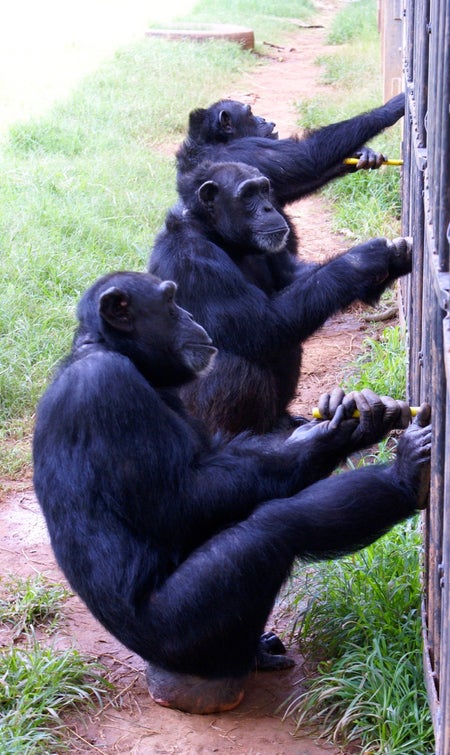
Collaborating Chimps Make for a Sweet Deal
Pinnipeds Descended from One Ancestral Line, Not Two
It’s the moment you’ve all been waiting for… stem-pinnipeds at Tet Zoo. Or, probable stem-pinnipeds anyway. This minimum-effort post is brought to you on the back of work showing that pinnipeds (seals, sea lions and walruses) are monophyletic, not diphyletic, and that the taxa shown here – Potamotherium, Puijila and so on – really are [...]
Grasses' Secret: They Have Flowers, and Some Are Gorgeous
Growing up, I felt certain that grass and most trees did not have flowers. They just had leaves and seeds — that was all I could see, anyway.
Snakes Mimic Extinct Species
In order to avoid predators, scarlet kingsnakes in North Carolina have evolved to more closely resemble a poisonous lookalike no longer found in the area
Getting to Know Whale Vaginas in Seven Steps
It's not easy to study a whale vagina. But it is necessary. Right now, penises get far more attention than vaginas in the science world. (It's also apparent in the museum scene, too—sadly, today, there's no vagina equivalent to rival the Icelandic Phallocological Museum).
King Penguin's Island-Hopping History Revealed
Receding glaciers at the end of the last ice age led to the flightless birds' move to the Crozet Islands
Island Sanctuary Could Save Sex-Crazed Northern Quoll
Life is tough if you’re a northern quoll (Dasyurus hallucatus). These rare, cat-sized Australian marsupials don’t have very long life spans—especially males, which tend to die after their first mating experience when less than a year old.
The Logic and Beauty of Cosmological Natural Selection
I have a prediction. There is a scientific hypothesis, formulated over 20 years ago, that we will one day look back on, when the evidence is in, and say “Of course that was right!
Fact or Fiction?: Mammoths Can Be Brought Back from Extinction
Is de-extinction a real possibility?
Crocodylomorphs: Better Than Dinosaurs and Mammals Combined
Crocodiles, alligators and gharials are the modern members of a far grander, far more diverse clade of archosaurian reptiles termed Crocodylomorpha.