
December 29, 2010
Habitable and not-so-habitable exoplanets: How the latter can tell us more about our origins than the former
Habitable and not-so-habitable exoplanets: How the latter can tell us more about our origins than the former
Cosmos Incognita: Voyager 1 Spacecraft Arrives at the Cusp of Interstellar Space
Thirty-three years into its voyage, the solar wind speed around Voyager 1 has dropped to zero as the space-hardened craft nears a milestone in its journey out of the solar system

Citizen scientists join the exoplanet hunt
Microbe gets toxic response
Researchers question the science behind last week's revelation of arsenic-based life.
Bacteria Use Arsenic as Basic Building Block in a Pinch
A bacterium has been discovered that can substitute arsenic for phosphorus in fundamental life chemistry. Christopher Intagliata reports
Poison Nil: Mono Lake Bacterium Exhibits Exotic Arsenic-Driven Biological Activity
A microbe in California's arsenic-rich lake can use the element, usually a poison, as a building block for DNA and other biomolecules
It's Even More Full of Stars
The discovery that elliptical galaxies have many more red dwarf stars than the Milky Way means that the universe might have three times as many total stars as previously thought. Cynthia Graber reports
Astronomers Get First Peek at Atmosphere of a "Super-Earth" Exoplanet
New constraints on a relatively small extrasolar world are beginning to reveal what the planet is made of--and whether it looks anything like our own
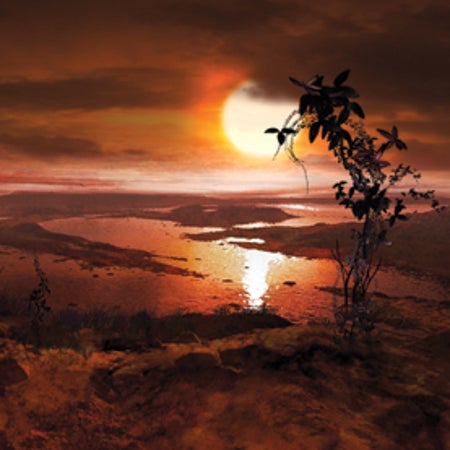
Black Plants and Twilight Zones: New Evidence Prompts Rethinking of Extraterrestrial Life
Discoveries of distant planets are challenging theorists to think deeply about extraterrestrial life
How One Astronomer Became the Unofficial Exoplanet Record-Keeper
A Q&A with astronomer Jean Schneider, maintainer of the online The Extrasolar Planets Encyclopedia
Don't leave it to the experts: Why scientists have a few people to thank!
NASA's Successor to Hubble Is $1.4 Billion Over Budget and 1 Year-Plus Behind Schedule, Inquiry Finds
Even in the best-case scenario, the future of the James Webb Space Telescope now looks worse than before