November 30, 2011
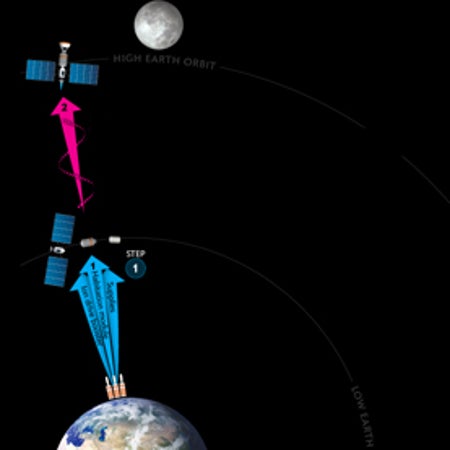
Breaking the Deep-Space Barrier [Interactive]
How a spacecraft propelled by ion drives could deliver humanity deeper into space than ever before. Read more in our special report on deep-space exploration
Breaking the Deep-Space Barrier [Interactive]
How a spacecraft propelled by ion drives could deliver humanity deeper into space than ever before. Read more in our special report on deep-space exploration

What Is Life Like in Other Parts of the Multiverse? [Video]
In a clip from the NOVA miniseries "The Fabric of the Cosmos," Brian Greene and his fellow physicists ponder the implications of multiple universes

Fresh Start: Scientists Glimpse Unsullied Traces of the Infant Universe
For the first time, astronomers discover pockets of pristine gas formed in the universe's first few minutes
Did Saturn's Moon Iapetus Once Have Its Own Moon?
A sub-satellite of the Saturnian moon would explain two of the most puzzling features of Iapetus. John Matson reports
Leading Light: What Would Faster-Than-Light Neutrinos Mean for Physics?
Most physicists are betting against the idea that neutrinos can pierce the cosmic speed limit, but that has not stopped some researchers from exploring the implications
The Dark Side of the Milky Way
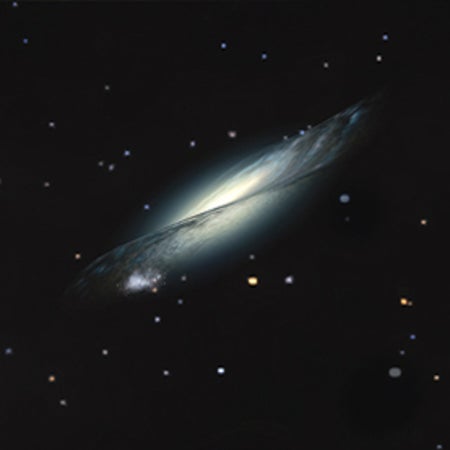
Dark matter is not just a puzzle. It is a solution
Star-Crossed: Milky Way's Spiral Shape May Result from a Smaller Galaxy's Impact
Encounters with the Sagittarius Dwarf Galaxy could have had huge effects on the structure of the Milky Way
Rotation Rate Could Pin Down Age of Stars
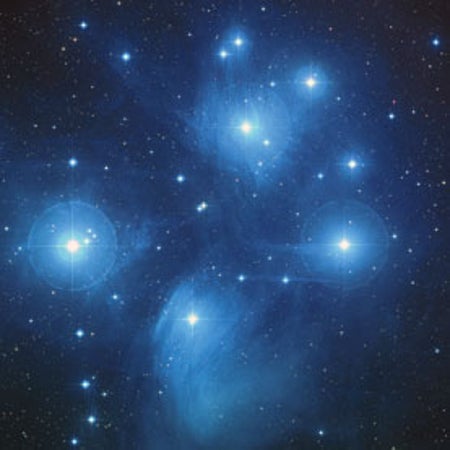
A new study may help scientists determine when stars were born
News Scans
In Brief
Does the Multiverse Really Exist?
Proof of parallel universes radically different from our own may still lie beyond the domain of science
NASA Budget Cuts Threaten Two New Telescopes
Flagship missions at risk as astrophysics funding shrinks.
Supernovae Seed Galaxies with Massive Amounts of Dust
A supernova that went off in 1987 produced large quantities of dust, which may explain why galaxies in the early universe were so dusty