
On supporting science journalism
If you're enjoying this article, consider supporting our award-winning journalism by subscribing. By purchasing a subscription you are helping to ensure the future of impactful stories about the discoveries and ideas shaping our world today.
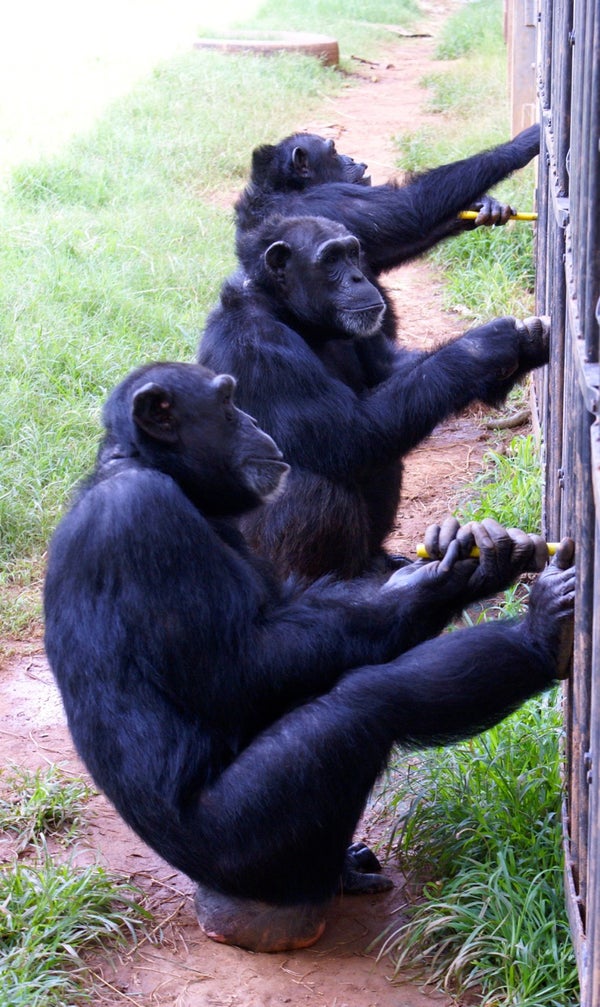
Ready, set, pull! This picture from a new study published June 12 in PeerJ shows three chimpanzees working together to snag snacks from a food-dispensing apparatus that requires cooperation to operate. The study, which tested 11 chimps, also showed that apes are picky when it comes to who they’ll partner with, preferring to work with others of a similar social rank.
This was the first experiment in which chimps picked their own partners and cooperated successfully without prior training, says lead author Malini Suchak, who conducted the study at Emory University (and is now a professor at Canisius College).
In this experiment chimpanzees on either end of the apparatus would pull on steel rods. Pulling them freed a food tray for the middle chimp to pull, releasing treats for all three apes. In another version of the experiment only two of the primates were needed to pull a single steel rod and the snack tray.
What treats inspire such cooperation? The chimps went for raisins, bananas, grapes and sweet potatoes. “It’s a primate trait through and through,” Suchak says. “We like the sugary stuff and so do they.”
A sweet tooth isn’t all humans and their simian cousins share. “We humans have a great cooperative potential,” says Frans de Waal, the paper’s senior author and a primatologist at Emory. “This study shows we are not the only primates to have this, it is probably an old primate trait.”
—Ben Fogelson