
Assuming that a match is one unit of length, it is possible to place 12 matches on a plane in various ways to form polygons with areas that have integral values. On this page are two such polygons: a square with an area of nine square units and a cross with an area of five square units. The problem is this: use all 12 matches to form, in similar fashion, the perimeter of a polygon with an area of exactly four square units. The entire length of each match must be used.

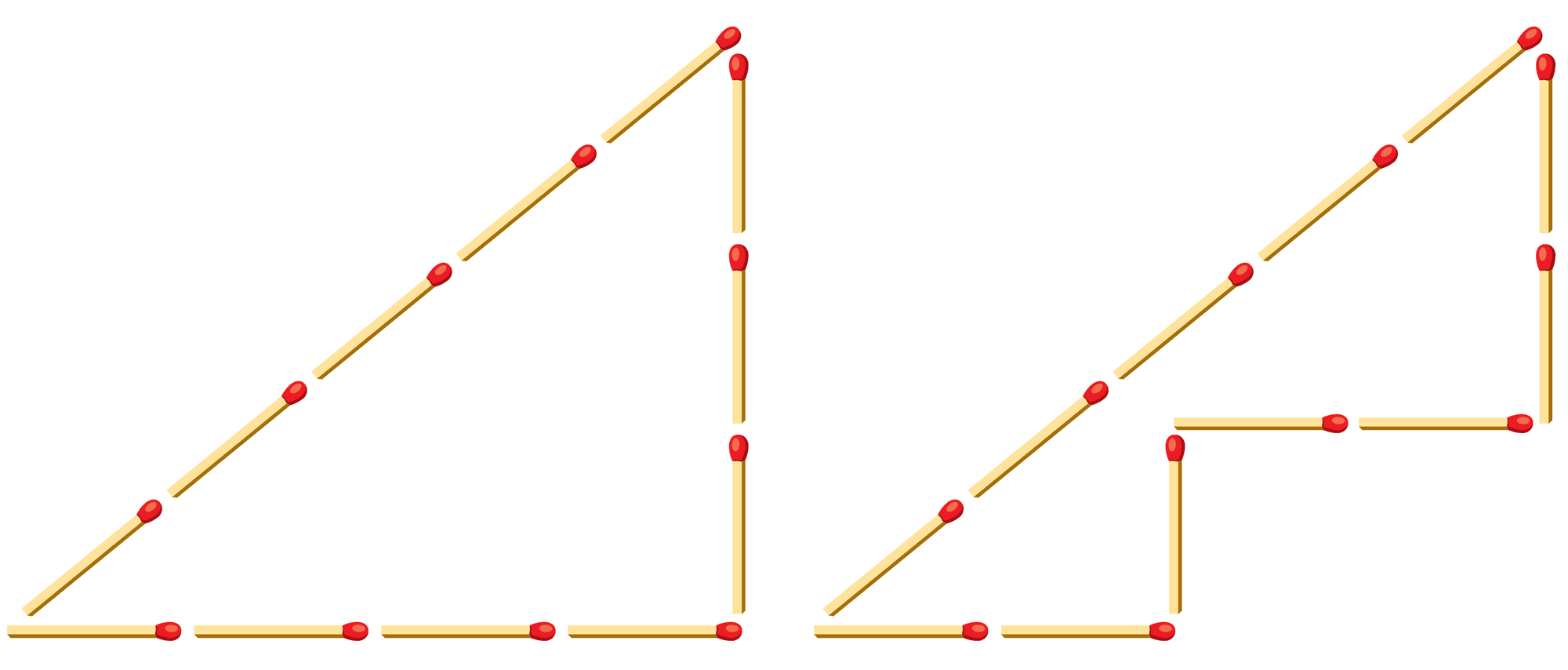
Twelve matches can be used to form a right triangle with sides of three, four and five units, as shown in the first part of the illustration below. This triangle will have an area of six square units. By altering the position of three matches as shown in the second part of the illustration, we remove two square units, leaving a polygon with an area of four square units.
We’d love to hear from you! E-mail us at games@sciam.com to share your experience.
A version of this puzzle originally appeared in the November 1957 issue of Scientific American.