The Samaritan Paradox
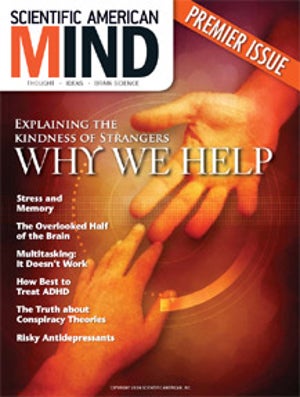
If we live in a dog-eat-dog world, then why are we frequently so good to each other?
You are currently logged out. Please sign in to download the issue PDF.
If we live in a dog-eat-dog world, then why are we frequently so good to each other?
Lost in a crowd, average individuals can become exceptionally virtuous or deadly. Their behavior depends on how they believe they are expected to act
A little stress sharpens memory. But after prolonged stress, the mental picture isn't pretty
Medication has reduced depression for decades, but newer forms of psychotherapy are proving their worth
After disregarding them for decades, neuroscientists now say glial cells may be nearly as important to thinking as neurons are
Logic suggests that having options allows people to select precisely what makes them happiest. But, as studies show, abundant choice often makes for misery
The latest neurological research has injected much needed objectivity into the disagreement over how best to treat children with attention-deficit disorders
Underappreciated yet vital, the sense of touch helps to complete an amazingly accurate mental picture of our surroundings and ourselves
Reading e-mail, sorting data and talking on the phone at once--multitasking clearly saves time in a fast-paced world. Or does it?
Conspiracy theories offer attractively simple explanations for a chaotic world. So we must be careful about what we believe
When do babies recognize the intentions of others--and become capable of deliberate actions themselves?
Thought-deciphering systems are enabling paralyzed people to communicate—and someday may let them control wheelchairs, prosthetics and even their own muscles
Adolescents are naturally drawn to occult ideas, but parents and therapists should know the signs that indicate when this fascination has become deeper and more dangerous
For people trapped in obsessive-compulsive thoughts and rituals, therapy and medication may offer the best way out