Fast Breeder Reactors
Nuclear reactors that use fast neutrons to produce more fuel than they consume are a promising approach to producing electric power with a minimum of strain on energy resources and the environment
You are currently logged out. Please sign in to download the issue PDF.
Nuclear reactors that use fast neutrons to produce more fuel than they consume are a promising approach to producing electric power with a minimum of strain on energy resources and the environment
These organelles of cells contain DNA, RNA and their own apparatus for synthesizing proteins. Their resemblance to bacteria suggests that they may be descended from free-living bacteria-like organisms
The celebrated Stonehenge is only one of 80 henge monuments known in Britain. Recent excavations at two of the largest henges show that they enclosed structures that were made not of stone but of wood
One of the codiscoverers of this remarkable substance takes up the question of whether it represents a new, polymeric form of water or is merely ordinary water with impurities
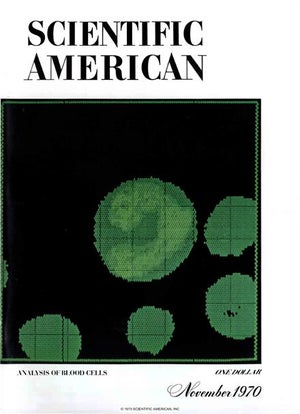
Microscopic examination of white cells is laborious and expensive. An experimental computer-operated system has been developed that identifies and counts cell types and describes cells quantitatively
The royal albatross and the wandering albatross are the largest birds in terms of wingspan. The species are so much alike that they probably evolved from a common ancestor in the recent past
Can discrimination be traced to some such origin as social conflict or a history of hostility? Not necessarily. Apparently the mere fact of division into groups is enough to trigger discriminatory behavior
The sea contains more than 70 elements in addition to sodium and chlorine. The global cycles that remove and replenish them involve rainfall, volcanoes and the spreading of the ocean floor