The Task of Medicine
American medicine is traditionally geared to respond to acute illness. Now that chronic illness plays a much larger role, it will be necessary to intervene more actively in its causes
You are currently logged out. Please sign in to download the issue PDF.
American medicine is traditionally geared to respond to acute illness. Now that chronic illness plays a much larger role, it will be necessary to intervene more actively in its causes
R factors, which transmit resistance to antibiotics from one bacterial strain to another, are carried on extrachromosomal genetic elements called plasmids, some of which have now been isolated and measured
Certain celestial objects radiate thousands of times more energy at infrared wavelengths than the sun does at all wavelengths. They evidently include stars being born and the debris of dying stars
The recent emphasis in hydrologic studies on the crucial role played by the general circulation of the atmosphere has led to schemes for altering this vast natural process
Microelectronic devices are now being "doped" with impurity atoms by firing ionized atoms into the device with an accelerator. The technique offers greater precision than the older diffusion method
Certain cells essential to lung function mature only shortly before birth. A way has been found to accelerate the development of these cells in order to prevent respiratory distress in premature infants
It is generally assumed that he was burned at the stake because he espoused the Copernican system. It appears, however, that he believed in the system more for mystical than scientific reasons
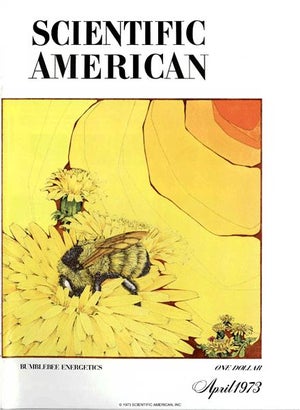
The bumblebee, like many other insects, evolved in interaction with the flowers it feeds on and pollinates. This evolutionary interaction is apparent in the energy budget of its activities