The Choice of Voting Systems
Any voting system can lead to paradoxical results where losers are preferred to winners and winners become losers. In certain situations, however, some voting systems are better than others
You are currently logged out. Please sign in to download the issue PDF.
Any voting system can lead to paradoxical results where losers are preferred to winners and winners become losers. In certain situations, however, some voting systems are better than others
Inside a semiconductor crystal float glowing droplets of a liquid composed entirely of electrons and "holes". The properties of this quantum-mechanical fluid are revealed by the radiation it emits
The color is that of rhodopsin, the "visual purple" of the animal eye. In halobacteria rhodopsin serves as the pigment of a newly discovered photosynthetic mechanism that converts light into chemical energy
Advances in tracking and computing methods are such that when the first of the two Viking spacecraft reaches Mars late in June, its position should be known to within 50 kilometers
Excavations at a site in the Peloponnesus show evidence of human habitation from the Ice Age through Neolithic times. They reveal the basic economic foundation of the Classical Greek civilization
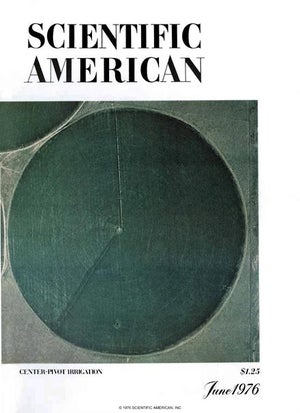
From the air over the U.S. high plains one can now see thousands of large circular fields. They are irrigated by a system in which water is applied from a central well by a novel rotating machine
Early records indicate that seven of these huge stellar explosions were seen over a period of 1,500 years. At the recorded positions of the new stars remnants of the explosions can be observed today
Running records are still far below human physiological limits. The restraints on performance are psychological: good runners do not work as hard once they have set a record or won a medal