Microelectronic Circuit Elements
The basic functional element of a modern electronic circuit is the transistor. Microelectronic technology has made it possible to employ large numbers of them in a single circuit
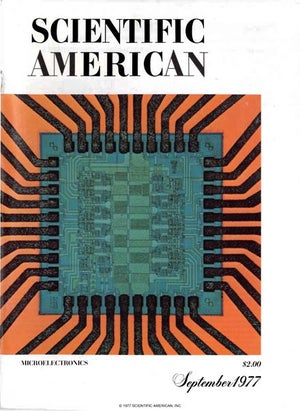
You are currently logged out. Please sign in to download the issue PDF.
The basic functional element of a modern electronic circuit is the transistor. Microelectronic technology has made it possible to employ large numbers of them in a single circuit
When thousands of circuit elements are integrated on one chip, the integration is said to be large-scale. Many of these circuits not only are electrical but also follow the rules of Boolean logic
The patterns of integrated circuits are made in the large and then are put on the chip photographically. The objective of fabrication methods is the production of chips at the lowest cost per function
Present memories based on transistors typically store some 16,000 bits (binary digits) on a chip. Magnetic-bubble and charge-coupled devices are providing an even higher density of information storage
A microprocessor is a computer central processing unit on a single chip. Currently it is associated with other chips in a microcomputing system. Now emerging, however, are complete computer systems on a single chip
Large modern computers could not exist without microelectronic components. Microelectronics has also led to the rise of smaller computers able to perform tasks that do not call for larger ones
Introducing an issue on the microelectronic revolution, in which putting large numbers of electronic elements on silicon "chips" has profoundly increased the capabilities of electronic devices
The essence of systems such as the telephone, radio and television is signal processing. The large capacity, high reliability and low cost of microelectronic devices make them ideal for such purposes
The functional architecture of the computer has traditionally been shaped by the size of specialized components and concepts of how people think. Microelectronics is now eliminating these constraints
Rates of progress in microelectronics suggest that in about a decade many people will possess a notebook-size computer with the capacity of a large computer of today. What might such a system do for them?