The Allocation of the Radio Spectrum
The electromagnetic spectrum from 10 kilohertz to 300 gigahertz is a natural resource of communication that must be fairly allocated. Reforms in the system of allocation are currently being considered
You are currently logged out. Please sign in to download the issue PDF.
The electromagnetic spectrum from 10 kilohertz to 300 gigahertz is a natural resource of communication that must be fairly allocated. Reforms in the system of allocation are currently being considered
They bypass the rules of ordinary genetic recombination and join together segments of DNA that are unrelated, transferring groups of genes among plasmids, viruses and chromosomes in living cells
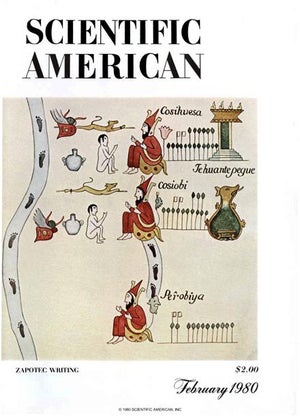
Among the high cultures of Mexico before the Spanish conquest was the Zapotec. Its hieroglyphs, mostly carved from 500 B. C. to A.D. 700, record the rise and decline of the Zapotec state
This satellite, carrying an X-ray telescope of unprecedented size and sensitivity, has been aloft for more than a year. It has yielded dramatic new views of high-energy phenomena in the universe
Yellowstone is a "hot spot" in the earth's crust. Its strong volcanic and tectonic activity makes it a unique location for the study of processes that originate deep in the earth
The exploitation of hydrogen as a fuel for motor vehicles requires a method for storing it safely and compactly at ambient temperature. Forcing it into the gaps among metal atoms may be the best approach
How does the human head change shape from infancy to adulthood? Tests of the way most people perceive the process show that growth can be represented by a particular type of geometric transformation
Many species of spider crabs can camouflage themselves by patterns of behavior in which they select materials from their environment and festoon them on their shell