Energy for Planet Earth
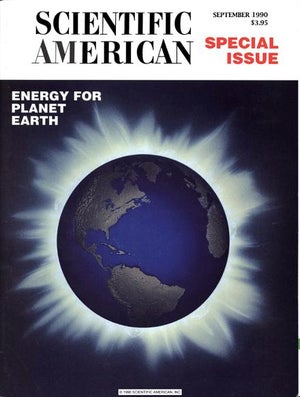
Our ability to meet the world's energy needs without destroying the planet on which we live is examined zn this special issue. With the right incentives, much can be done
You are currently logged out. Please sign in to download the issue PDF.
Our ability to meet the world's energy needs without destroying the planet on which we live is examined zn this special issue. With the right incentives, much can be done
Advanced technologies offer an opportunity to meet the world's future energy needs while minimizing the environmental impact. Both suppliers and consumers of electricity can benefit from the savings
New technologies-superwindows, compact fluorescent lights and automated-control systems-combined with other strategies, such as shade trees and light -colored buildings, could reduce building energy bills by half
Industrial processes consume two fifths of the developed world's energy. Efficiency improvements have steadily cut that share and promise to continue
They consume a growing share of the world's oil supply and are also major polluters. Efficient designs, alternative fuels and rational transportation systems can help solve the problem
By mixing efficient end-use technologies with modest increases in generating capacity, developing countries can affordably obtain the energy they need without ruining the environment
Economic reforms and new technology may allow the centrally planned economies and the emerging democracies to develop without further harm to the environment
Until other energy sources supplant coal, oil and natural gas, the technological challenge is clear: extract maximum energy from the old standbys while minimizing harm to the environment
Atomic energy's vast potential can be harnessed only if issues of safety, waste and nuclear-weapon proliferation are addressed by a globally administered institution
Various forms of solar energy, including wind and biomass, offer environmentally benign ways to generate electricity and make fuels. Some technologies will be cost-competitive before the year 2000
The era of cheap and convenient sources of energy is coming to an end. A transition to more expensive but less polluting sources must now be managed