Heart of the Matter
A particle "factory" for probing a seminal asymmetry
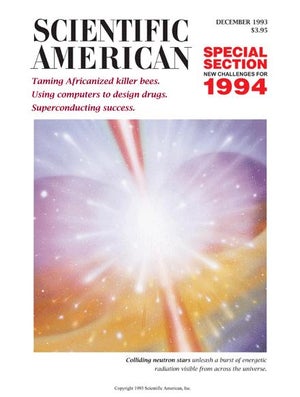
You are currently logged out. Please sign in to download the issue PDF.
A particle "factory" for probing a seminal asymmetry
The burgeoning business of gene therapy
Porous silicon proves versatile, but is it real?
Shedding light on sonoluminescence
The nation contemplates what to do with Superfund
Medicine closes in on an artificial liver device
Glaciers and oceans reveal a mercurial climate
Does the brain have a supreme integrator?
Diamond continues to resist efforts at economic synthesis
Is the last ground sloth hidden in the Amazon?
Making space for the next wave of wireless communications
IBM's woes visit its esteemed research division
Defense researchers seek to redefine their mission
Researchers discover a new mechanism for cancer
Closing in on the "solar neutrino problem"
Family size is decreasing in many Third World countries. The reasons provide the key to slowing population growth
A steady stream of data from this orbiting observatory is painting a portrait of a dynamic and often enigmatic cosmos
The diversity of human tissue types was generated long before Homo sapiens emerged
Africanized honeybees have reached the U.S. from points south As more of them arrive, they will certainly wreak some havoc but perhaps not the type their "killer bee" nickname would imply
Structure-based design, an innovative approach to developing drugs, has recently spawned many promising therapeutic agents, including several now in human trials for treating AIDS, cancer and other diseases
A subtle mathematical thread connects clocks, ambling elephants, brain rhythms and the onset of chaos
New archaeological excavations reveal that as the ancient island societies suffered from environmental decline, they developed an extreme religious preoccupation with life and death
Now that the blizzard of hype has stopped, workers are gradually realizing the promise of high-temperature superconductors