Detecting Anthrax
Rapid sensing would save lives
You are currently logged out. Please sign in to download the issue PDF.
Rapid sensing would save lives
Extraterrestrial impacts ended the age of the dinosaurs. New research shows that they could have been the culprits behind many mass extinctions as well
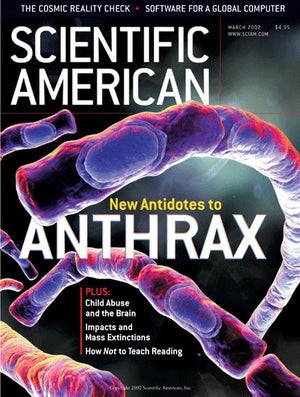
Recent discoveries are suggesting much-needed strategies for improving prevention and treatment. High on the list: ways to neutralize the anthrax bacterium's fiendish toxin
Maltreatment can have enduring effects on a child's developing brain, diminishing growth and reducing activity in key areas
A highly popular method of teaching reading to children is inadequate on its own
An operating system spanning the Internet would bring the power of millions of the world's Internet-connected PCs to everyone's fingertips
A gentle radiance pervading the heavens suggests that astronomers' inventory of cosmic objects may soon be complete